
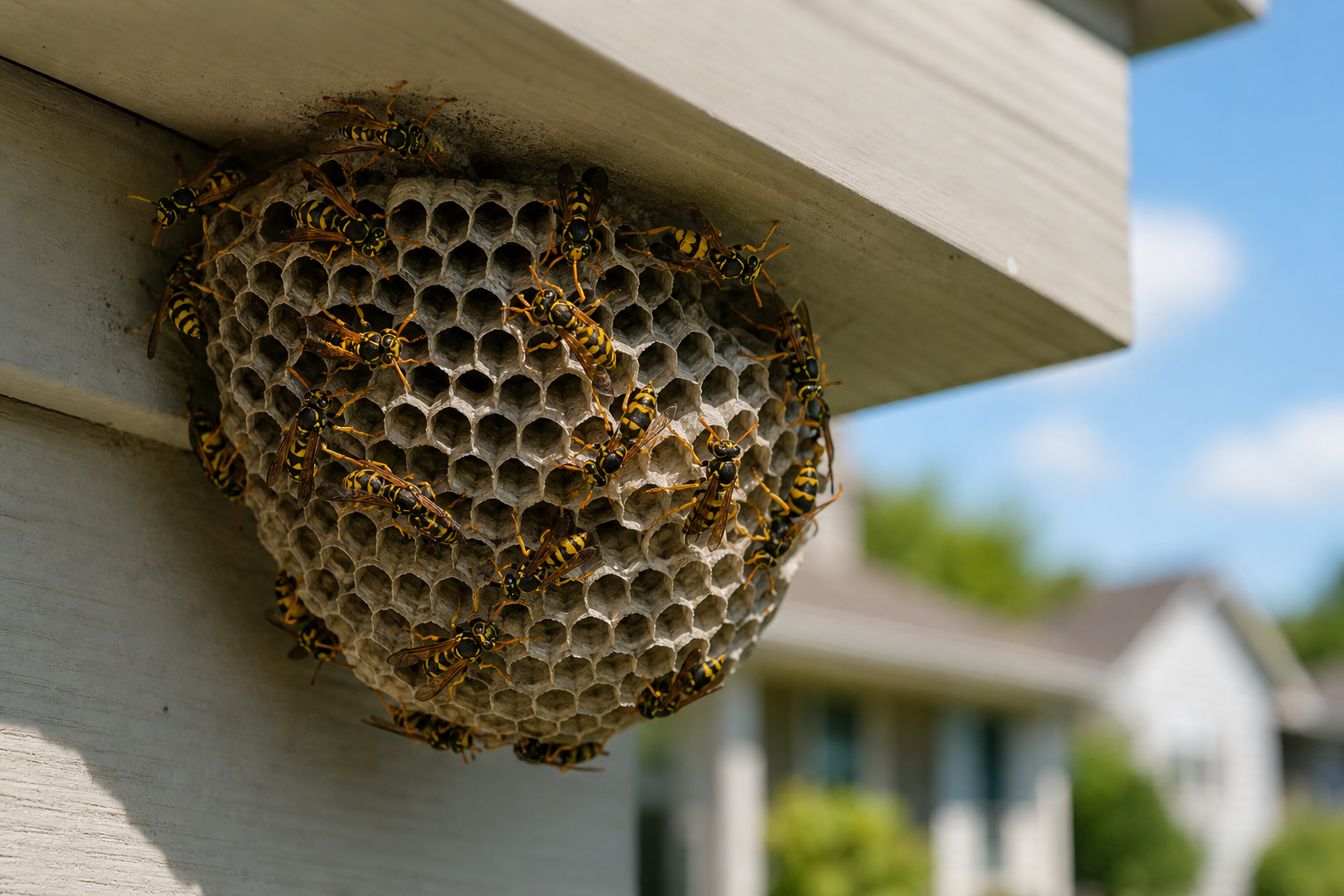
Wasps are valuable outdoor predators, but a nest in the wrong place can quickly turn from helpful to hazardous. Knowing when to observe from a distance and when to call for wasp removal helps protect your household, pets, and property. This guide offers a simple decision framework, practical safety steps, and prevention tips you can use right away.
How to recognize a wasp problem
Before deciding what to do, make sure you’re dealing with wasps and not bees or harmless solitary insects. While identification can be tricky, these general signs point to a wasp issue:
- Frequent wasp traffic along a consistent flight path, especially mornings and late afternoons.
- A visible nest: paper-like combs (often under eaves or in shrubs), spherical paper nests, or concealed nests inside wall voids, soffits, sheds, decks, or ground cavities.
- Persistent interest around food, garbage, compost, pet dishes, or outdoor cooking areas.
- Buzzing and defensive behaviour when you approach a particular spot, even from a distance.
If you only notice the occasional wasp foraging in the yard with no obvious nest or pattern, you may be observing normal seasonal activity. The sections below will help you decide whether monitoring is enough or whether removal is the safer choice.
When it’s safe to monitor vs. act
Not every sighting requires immediate removal. Use this practical rule of thumb: the closer and more embedded the nest is to your living spaces and routine, the more urgent the response should be.
Situations where careful monitoring may be reasonable:
- The nest is small, high, and distant from doors, paths, play areas, and workspaces.
- There is minimal wasp traffic and no defensive behaviour when you walk by at a safe distance.
- You can maintain a clear buffer zone (for example, temporarily avoiding one corner of a fence line or a remote tree branch).
- You have no pressing landscaping or repair tasks near the site.
Situations where you should plan for removal:
- The nest is in or on a structure (e.g., wall voids, soffits, attics, sheds, decks) or on frequently used fixtures (mailboxes, light fixtures, porch ceilings).
- The nest or flight path is close to entries, walkways, driveways, play sets, patios, or pet areas.
- There is aggressive behaviour when you approach from a distance, including dive-bombing or quick swarming.
- Multiple nests are present or activity has increased sharply over days.
- You or a household member has a known or suspected allergy to stings.
Note on health and safety: Stings can cause serious reactions in some people. If someone is stung and experiences symptoms such as difficulty breathing, swelling of the face or throat, dizziness, or widespread hives, seek emergency medical attention immediately. This article provides general information only and is not medical advice. Consult a qualified healthcare professional for guidance specific to your situation.
Signs you should call for wasp removal
While some very small, isolated nests may be addressed early, the following signs strongly suggest that calling for removal is the prudent option:
- You see wasps entering a crack, gap, or vent on your home. Nests inside walls, soffits, or roofs are harder to treat safely and may expand rapidly. DIY attempts risk driving wasps deeper into voids or into living spaces.
- There is a ground nest near foot traffic. Ground nests can be disturbed by lawn maintenance, kids playing, or pets, triggering multiple stings within seconds.
- The nest is larger than a tennis ball or shows multiple comb layers. Larger colonies mean more defenders and a higher risk of repeated stings from a single disturbance.
- You notice repeated wasp interest at food or garbage areas. Foraging wasps habituate quickly to reliable food sources, making patios and outdoor kitchens hotspots for stings.
- Someone in the home is at higher medical risk. This includes those with known allergies, infants, older adults, or individuals who may have difficulty moving away quickly.
- Previous DIY attempts failed or made activity worse. Partial treatments can disperse the colony or relocate it deeper into structures.
These triggers focus on proximity, growth, concealment, and risk profile—factors you can reliably observe and verify without specialized tools.
Immediate steps to take before help arrives
If you’ve decided to call for wasp removal, the right short-term actions can lower the risk of stings and prevent the problem from escalating:
- Mark and avoid the area. Use temporary barriers or signs to steer family members and guests away. Keep pets indoors or on a leash away from the nest site.
- Reduce attractants. Close bins, clean up spills, and move pet food inside. Rinse recyclables and keep compost sealed.
- Minimize vibrations. Postpone mowing, trimming, drilling, or hammering near the nest. Vibrations can trigger defensive swarms.
- Plan access. Clear safe pathways for the technician, and gather any details you’ve observed: entry points, times of peak activity, and locations where you’ve seen wasps inside.
- Close interior routes. If wasps have emerged inside, gently close doors to isolate rooms and place a towel at the door base to limit movement until help arrives.
Do not seal exterior entry holes while wasps are active inside the structure. Trapping a colony without addressing the nest can push wasps into interior spaces.
DIY vs. professional removal considerations
If you are evaluating whether to attempt removal yourself, weigh the following factors carefully. This is a decision framework—not a recommendation—for you to balance risk and practicality.
DIY may be considered only when all of the following are true:
- The nest is very small, fully exposed, and far from people and pets.
- You can maintain a wide safety buffer and have a clear retreat path.
- You have suitable protective clothing, can work calmly, and can schedule treatment during low-activity periods (often cool evenings).
- There are no known sting allergies in your household.
Calling for removal is advisable when any of the following apply:
- The nest is concealed in a wall, roof void, soffit, deck, shed, or ground cavity.
- The nest is larger, activity is high, or the colony shows defensive behaviour.
- The location is difficult to access safely or requires working at height.
- You’ve tried DIY and activity persisted or moved.
- There is a medical risk factor in the household.
Even with careful planning, DIY attempts can go wrong quickly due to hidden nest size, secondary entrances, or sudden defensive responses. If you’re uncertain, err on the side of caution and arrange removal.
Prevention checklist
Prevention is the most reliable way to avoid urgent removals later. Use this seasonal checklist to lower the odds of wasps nesting in or around structures you use daily.
- Seal entry points: Inspect and repair gaps around soffits, vents, fascia, siding, and where pipes or wires enter. Fit tight screens over attic and dryer vents. Use appropriate sealants after ensuring no active colony is inside.
- Trim vegetation: Keep shrubs, hedges, and vines trimmed away from eaves, decks, fences, and play equipment to reduce sheltered nesting spots.
- Manage attractants: Keep garbage and compost bins closed; rinse recyclables. Clean outdoor dining areas after use. Store pet food indoors.
- Maintain wood and structures: Repair weathered wood, replace loose boards, and tighten railings and fence caps. Close gaps beneath steps, sheds, and decks with appropriate barriers.
- Check high-risk fixtures: Periodically inspect porch ceilings, light fixtures, mailboxes, pergolas, swing sets, and gazebo roofs.
- Early-season scans: In spring and early summer, look for small starter nests under eaves or in corners. Small nests are easier to address promptly and safely.
- Lawn and ground care: Fill animal burrows and depressions that could become ground nest sites. Keep grass reasonably short in high-traffic areas.
Set a recurring reminder to inspect key areas monthly during warm months. Consistent light maintenance helps you catch problems before they become urgent.
FAQ
How close is “too close” for a wasp nest?
If a nest is within regular walking paths, near doors or windows, or beside spaces where you eat, work, or children play, consider it too close. A simple test is whether you can go about normal routines without altering your route. If not, plan for removal.
Can I wait until winter to deal with a nest?
Some nests die off with cold weather, but waiting may prolong risk through the season and allows hidden colonies to expand or enter structures. If the nest is causing safety concerns now, it’s better to address it rather than delay.
What time of day is safest to approach a nest?
Wasp activity is typically lower during cooler evening hours. However, lower activity does not eliminate risk, especially for concealed or larger nests. If you decide to inspect from a distance, keep it brief, wear protective clothing, and maintain a clear retreat path. When in doubt, avoid close approaches and arrange removal.
Do fake wasp nests or deterrents work?
Visual deterrents may discourage some nest starts in limited scenarios, but results vary widely. They work best as part of a broader prevention plan—sealing entry points, reducing shelter, and managing food sources—rather than as a standalone solution.
Why are wasps suddenly interested in my patio?
Food and moisture draw foraging wasps. Spilled drinks, barbecue residue, open bins, and fruit from nearby plants can rapidly increase visits. Clean surfaces after use, close bins securely, and remove ripe or fallen fruit to reduce attraction.
What should I do if wasps get inside my home?
Stay calm and isolate the area by closing doors and placing a towel at the base to limit movement. Avoid swatting near light fixtures or windows to prevent agitation. If indoor sightings are recurring, look for exterior entry points from a safe distance and arrange removal.
Clear next steps
Use this quick decision path:
- Observe safely: From a distance, note nest location, size, and flight paths.
- Check proximity: If the nest is near doors, walkways, play areas, or inside structures, plan for removal.
- Consider risk factors: Allergies, pets, kids, large or concealed nests, and any defensive behaviour increase urgency.
- Stabilize the area: Reduce attractants, avoid vibrations, and redirect foot traffic.
- Arrange removal if uncertain: When in doubt—especially with concealed or growing nests—prioritize safety and book removal.
A practical next step
To discuss the options that apply to your situation, contact Bugman Plus and request the relevant details before moving forward.


