

Wasp prevention around home refers to the proactive steps that stop wasps from nesting on your property by removing food, water, and shelter while sealing entry points. In Oshawa, prevention is most effective from early spring through late summer. Done right, it reduces sting risk, protects siding and soffits, and makes outdoor spaces comfortable.
By Krunal Agarwal | Last updated: 2026-07-05
Overview
Preventing wasps at home means eliminating attractants (sweet foods, protein scraps, standing water), sealing gaps (soffits, window frames, vents), and disrupting early nest starts. Focus efforts from April to September, rechecking problem areas every 7–10 days for fresh papery combs, especially under eaves, porch ceilings, sheds, and fence posts.
Here’s what you’ll get in this complete, Oshawa-focused guide:
- Clear definitions, timelines, and species basics that shape smart prevention
- Step-by-step sealing, sanitation, and landscaping tactics that actually work
- Checklists, a 14‑day action plan, and tool recommendations you can use today
- Local insights tied to Oshawa’s neighborhoods and seasonal patterns
- Professional triggers—when DIY stops and safe removal is the right call
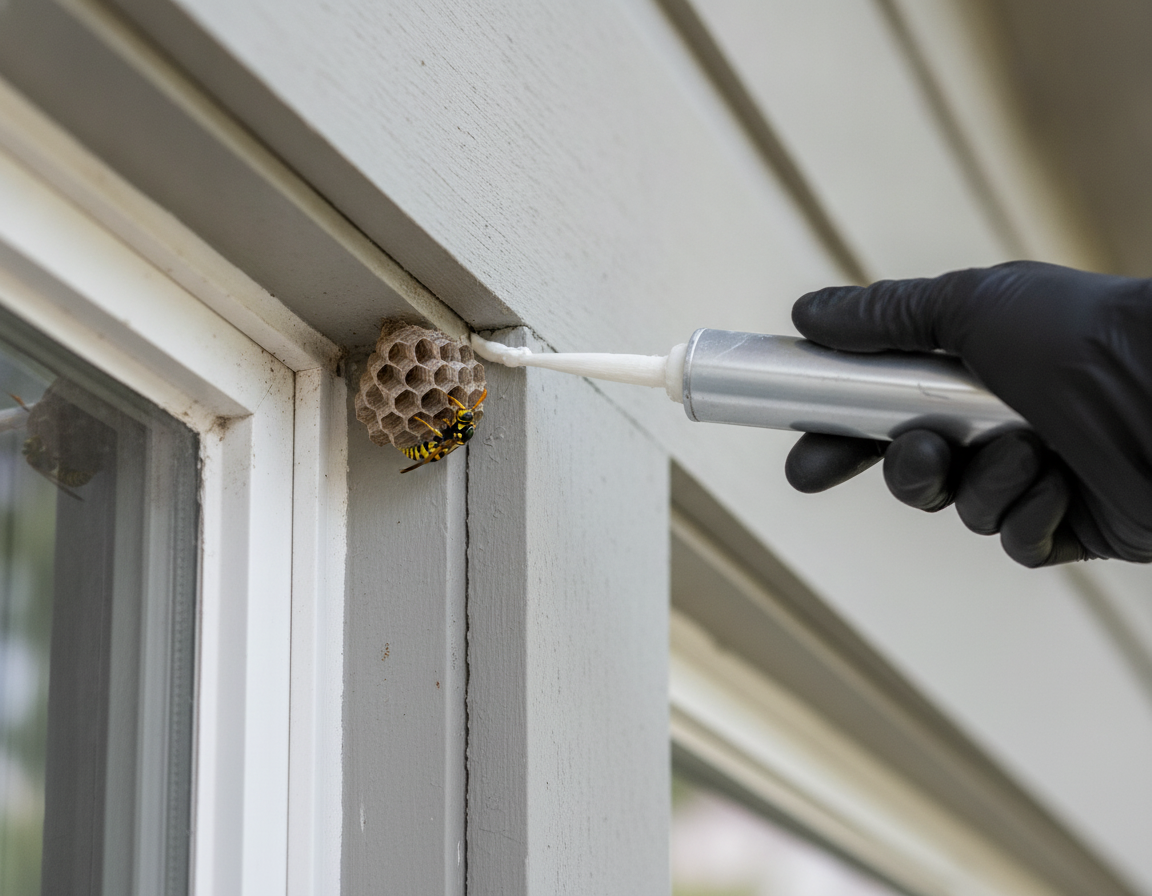
What is wasp prevention?
Wasp prevention is a proactive home-maintenance program that removes food, water, and nesting harborage while sealing entry points to stop colonies from forming. It combines sanitation, exclusion, habitat trimming, and routine inspections to intercept tiny combs before they become mature nests that threaten people and pets.
Prevention starts before you ever see a buzzing cluster. In our experience helping Oshawa homeowners, early-season checks in April and May catch the first thumb-sized combs under eaves and porch ceilings. If you interrupt nest building at that stage, you spare yourself months of aggressive activity near doors, decks, and play areas.
Why wasp prevention around home matters
Prevention lowers sting risk, protects trim and soffits, and keeps doors, decks, and play spaces comfortable. In neighborhoods like Oshawa’s, wasp activity peaks mid‑summer, so stopping early nest starts in spring prevents repeated foraging flights around windows, outdoor dining areas, grills, and recycling bins.
Stings aren’t just painful—they can trigger severe reactions. More activity around portals like porch lights and patio doors means more chance encounters. We also see siding damage when nests are built into gaps or hollow voids. A prevention plan reduces these problems while making summer cookouts far less stressful.
Local considerations for Oshawa
- Trim and inspect around community green spaces like Prince of Wales Park edges bordering backyards—wasps often stage there before scouting soffits.
- Peak scouting typically runs May through August; check every 7–10 days during that window, and after hot snaps.
- Near retail hubs such as Whitby Mall, keep lids sealed on bins between pickup days; food odors can draw foragers across parking lots and lanes.
How wasp prevention works (behavior and timing)
Effective prevention times your actions to wasp behavior: queens scout in spring, workers expand nests in summer, and colonies decline by fall. You interrupt nesting by sealing gaps before scouts arrive, removing food/water during peak foraging, and inspecting hot spots weekly to dismantle new combs early.
Understanding timing is half the battle. Queens seek sheltered, dry, horizontal surfaces—soffits, porch ceilings, and shed rafters—when temperatures rise. Once workers emerge, nest growth accelerates, and dislodging becomes riskier. That’s why we emphasize a spring seal-and-scan routine and a weekly sweep through August.
| Phase | Typical window (Oshawa) | Primary activity | Best homeowner action |
|---|---|---|---|
| Queen scouting | April–May | Searching for protected sites | Seal gaps, install screens, inspect eaves/porches weekly |
| Nest expansion | June–August | Workers enlarge combs; heavy foraging | Sanitation, water control, vegetation trimming; early nest removal |
| Colony decline | September–October | Population drops; new queens disperse | Final inspections; prep sealing list for spring |
Identify the wasps near your home
Paper wasps build open, umbrella-shaped combs under eaves; yellowjackets favor enclosed voids and ground cavities; hornets (a type of yellowjacket) make large, enclosed aerial nests. Knowing which species you have guides safe removal and prevention around entries, decks, and yard perimeters.
Species matter because their nesting choices and defensiveness differ. Paper wasps often perch calmly unless the comb is disturbed. Yellowjackets defend aggressively near food, especially late summer. Bald-faced hornets hang gray, football-shaped nests in trees or fascia corners. Solitary mud daubers build tube-like mud nests and seldom sting.
| Type | Typical nest | Risk level near people | Prevention focus |
|---|---|---|---|
| Paper wasps | Open comb under eaves, porch ceilings, play structures | Moderate when disturbed | Seal soffit gaps; inspect weekly in spring |
| Yellowjackets | Enclosed voids, ground cavities, wall voids | High near food and late season | Sanitation, bin control, avoid sealing active voids |
| Bald-faced hornets | Large, enclosed aerial nest on trees/fascia | High; broad defensive radius | Early detection; professional removal recommended |
| Mud daubers | Mud tubes on walls/rafters | Low; rarely sting | Knock down tubes; patch small cracks |
Methods and approaches that actually work
Combine four pillars: sanitation, exclusion, habitat trimming, and routine inspections. Keep lids tight and bins clean, seal gaps over 1/8 inch, prune shrubbery 6–12 inches off siding, and sweep hot spots weekly April through August. This layered approach breaks food, water, and shelter all at once.
Sanitation and odor control
- Keep outdoor cans lined, rinsed, and latched; wash with soapy water every 2–4 weeks.
- Move bins 15–20 feet from doors and windows to reduce fly-by scouting near entries.
- Rinse bottles/cans; bag protein scraps; clean grill grates the same day after use.
- Empty standing water in toys, saucers, and birdbaths every 48–72 hours.
Exclusion and small-gap sealing
- Seal 1/8–1/4 inch gaps at soffit returns, fascia joints, and around utility penetrations.
- Install 1/8 inch mesh on attic, gable, and dryer vents; repair tears in door/window screens.
- Weatherstrip exterior doors; close gaps under garage and shed doors with brush seals.
- Caulk nail holes and trim seams where papery combs often anchor in spring.
Habitat trimming and surface tweaks
- Maintain a 6–12 inch vegetation gap around siding and meters to expose scouting wasps.
- Thin dense hedges near porch steps and mailboxes where foragers cruise for nectar.
- Switch to warm-white LED porch bulbs; they’re less attractive to nighttime insects that draw wasps by day.
Monitoring and early knockdown
- Inspect under eaves, soffit returns, pergolas, swing sets, and shed rafters every 7–10 days in spring.
- Use a long-handled scraper or a jet of water early morning when temperatures are cool for tiny, unoccupied combs.
- If multiple adults are present or a void is involved, pause and consider professional help.
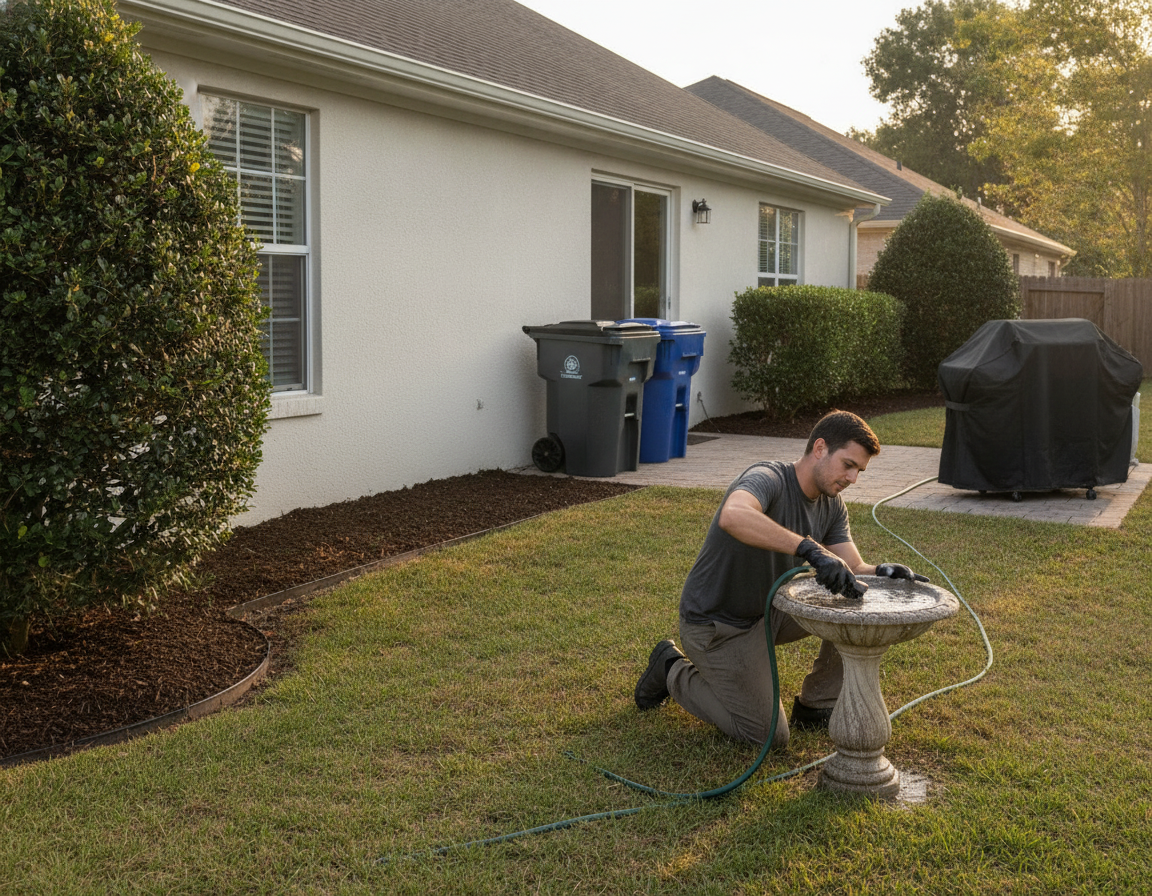
Step-by-step: your 14‑day starter plan
In two weeks you can harden your home against wasps: day 1–3 inspection, day 4–7 sealing, day 8–10 sanitation reset, and day 11–14 vegetation trimming plus a final sweep. Recheck hot spots every 7–10 days through August to stop fresh combs from maturing.
- Walk the perimeter at sunrise: eaves, porch ceilings, fascia corners, meter boxes, fence posts.
- List every gap ≥ 1/8 inch and any thumb-sized paper combs; photograph locations.
- Install 1/8 inch mesh on vents; patch all window and sliding-door screens.
- Seal soffit/trim seams with exterior-grade caulk; add brush seals at garage and shed doors.
- Wash and deodorize trash/recycling bins; add tight-fitting liners and latches.
- Move bins 15–20 feet away from doors and outdoor dining areas; shade if possible.
- Rinse bottles/cans and freeze meat scraps until collection day to reduce odors.
- Clean grill grates and drip trays after each use; close lids when cool.
- Dump and refresh birdbaths and saucers every 48–72 hours; fix leaky spigots.
- Trim shrubs 6–12 inches off siding; elevate mulch so it doesn’t touch wood trim.
- Swap bright porch bulbs for warm-white LEDs to reduce insect draw.
- Do a dawn or dusk sweep for new tiny combs; remove only if unoccupied.
- Flag any active nests with adult traffic; avoid sealing live voids.
- Schedule professional removal for active or inaccessible nests.
Top mistakes that invite wasps (and easy fixes)
Common missteps include leaving lids ajar, sealing live nests into wall voids, skipping screens on vents, and ignoring weekly inspections. Fix them by tightening sanitation, sealing only inactive gaps, installing 1/8 inch mesh on vents, and keeping a recurring 7–10 day inspection cadence.
- Leaving sugary cans and barbecue trays outside overnight—rinse or bag immediately.
- Sealing a buzzing void—this traps wasps inside walls and can push them indoors.
- Letting hedges rest against siding—creates hidden ledges perfect for early combs.
- Skipping vent screens—unprotected attic and gable vents are open invitations.
- One-and-done mindset—spring wins fade without weekly rechecks in peak months.
- Power-spraying big aerial nests—risks dispersal and stings. Call a professional.
- Using sweet bait traps near doors—may increase fly-bys around entryways.
Tools, materials, and simple resources
You don’t need specialty gear for prevention: exterior-grade caulk, 1/8 inch mesh, weatherstripping, a caulk gun, utility knife, safety glasses, gloves, and a step ladder cover most tasks. Add a headlamp for dawn inspections and warm-white LED bulbs to cut insect draw at night.
- Exterior-grade caulk and backer rod for seams and 1/8–1/4 inch gaps.
- 1/8 inch galvanized mesh for attic/gable/dryer vents plus self-tapping screws.
- Brush door seals and weatherstripping kits for exterior and garage doors.
- Soapy cleaner, hose nozzle, and bin deodorizer for trash and recycling maintenance.
- Bypass pruners and hedge trimmers for the 6–12 inch siding clearance.
- Headlamp and long-handled scraper for early-morning comb checks.
If you prefer a done-for-you approach, our team at Bugman Plus handles safe nest removal and targeted prevention advice as part of our Spider/Wasp Control service. We also back interior treatment programs with a 3‑month warranty and emphasize quality workmanship across every visit.
Get a quick assessment
Not sure whether a nest is active or safe to remove? Send photos and your notes through our Get a Quote form, and we’ll advise on next steps and schedule removal if needed.
Wasp prevention around home: the complete playbook
Anchor your plan to four routines: weekly inspections, monthly bin washing, quarterly sealing touch-ups, and seasonal vegetation trimming. Add lighting tweaks and water control, and you’ll starve nests of what they need—food, water, and shelter—while catching any new combs before they mature.
Weekly
- Dawn or dusk eave/soffit sweep; check porch ceilings, pergolas, swings, sheds.
- Spot-wash sticky spills on decks and railings; close bin lids tightly.
Monthly
- Wash trash/recycling bins with soapy water; deodorize and dry before relining.
- Review screens and weatherstripping; re-caulk any fresh trim hairline cracks.
Quarterly
- Trim hedges for a 6–12 inch siding gap; thin dense plantings by entries.
- Audit lighting; keep warm-white LEDs on dusk-to-dawn timers.
Seasonal
- Spring: prioritize sealing; summer: sanitation and water; fall: close-out inspection.
- Before long weekends or parties, double-clean decks and grill areas.
Case studies: what prevention looks like in Oshawa homes
In our Oshawa service calls, early detection plus smarter sanitation solved most recurring wasp problems in under one season. The playbook: seal micro-gaps, move and clean bins, trim vegetation off siding, and keep weekly inspections through August. Active or hidden nests? Schedule safe removal.
- North Oshawa porch combs: A family found thumb-sized paper wasp combs every May. We sealed fascia joints, added brush seals to a warped garage door, and moved bins 18 feet away. No new combs for the rest of the season.
- Backyard deck near a greenbelt: Foragers swarmed a grill station. We set a bin wash cadence, cleaned sugary rail stains, and trimmed a hedge abutting the stairs. Activity dropped within one week.
- Shed rafters and swing set: New combs popped up after every heat wave. We installed 1/8 inch vent mesh, caulked rafter seams, and created a Saturday dawn inspection routine. The small combs stopped appearing.
When nests were already active or tucked into voids, we handled removal through our service team, then left a homeowner-specific prevention checklist to keep things calm all summer.
When to call a professional (and why it helps)
Call a pro if a nest is larger than a baseball, built inside a wall or ground void, has persistent adult traffic, or sits near doors, decks, or play areas. Safe removal reduces sting risk, prevents wall intrusions, and clears the slate so your prevention plan holds.
Professional removal matters most for yellowjackets in wall voids and for large aerial hornet nests. Closing a live void forces wasps to find new exits—often indoors. Our technicians perform a controlled takedown, then recommend sealing and sanitation steps tailored to your layout so the issue doesn’t return.
If you’re weighing DIY versus calling in help, start with a quick message on our contact page. You can also learn about our values and warranty on the About Bugman Plus page and browse other services on the Services page.
Frequently Asked Questions
Homeowners ask about timing, safe removal, sprays, and whether prevention reduces other pests. Here are clear answers you can act on today.
When should I start wasp prevention around home?
Begin in early spring as temperatures warm. Seal gaps and install vent screens in April–May, then run weekly inspections through August. Sanitation and water control matter most during summer when foraging peaks.
Is it safe to remove a small paper wasp nest myself?
If the comb is tiny and unoccupied, a cool early-morning knockdown from a safe distance can work. If adults are present or the nest is in a void, avoid DIY. Near entries, decks, or play areas, schedule professional removal.
Will better bin hygiene really reduce wasps?
Yes. Rinsed containers, sealed liners, latched lids, and monthly bin washing cut the odors that attract yellowjackets and paper wasps. Moving bins 15–20 feet from doors also reduces fly-bys near entries.
Can prevention steps help with other pests too?
Absolutely. Exclusion and sanitation also deter ants, rodents, and cockroaches. If you’re exploring broader prevention, our team can advise while on-site for wasp issues.
Key takeaways
Start early, seal small gaps, control odors and water, and inspect weekly through August. Use 1/8 inch mesh, keep vegetation off siding, and move bins away from doors. Call a professional for active, large, or inaccessible nests to reset conditions safely.
- Early action (April–May) prevents months of activity near doors and windows.
- Four pillars: sanitation, exclusion, trimming, and inspections.
- Weekly sweeps catch thumb-sized combs before they mature.
- Large or void nests require professional removal to avoid indoor incursions.
- Pair prevention with broader home pest hygiene for year-round calm.
Conclusion: turn your porch and windows into no‑nest zones
A calm summer starts with a simple rhythm: seal in spring, sanitize and inspect all summer, then close out in fall. The result is fewer encounters, safer entries, and a porch you can actually enjoy. If a nest is active, bring in a pro, reset the site, and keep your routine tight.
Prevention isn’t a single task—it’s a light, recurring cadence. Focus on small wins each week: a cleaned bin, a sealed seam, a trimmed hedge, a five‑minute dawn sweep. That consistency blocks the food, water, and shelter wasps need. And when a removal is necessary, our Bugman Plus service team is here to help you “win the war on pests.”


