
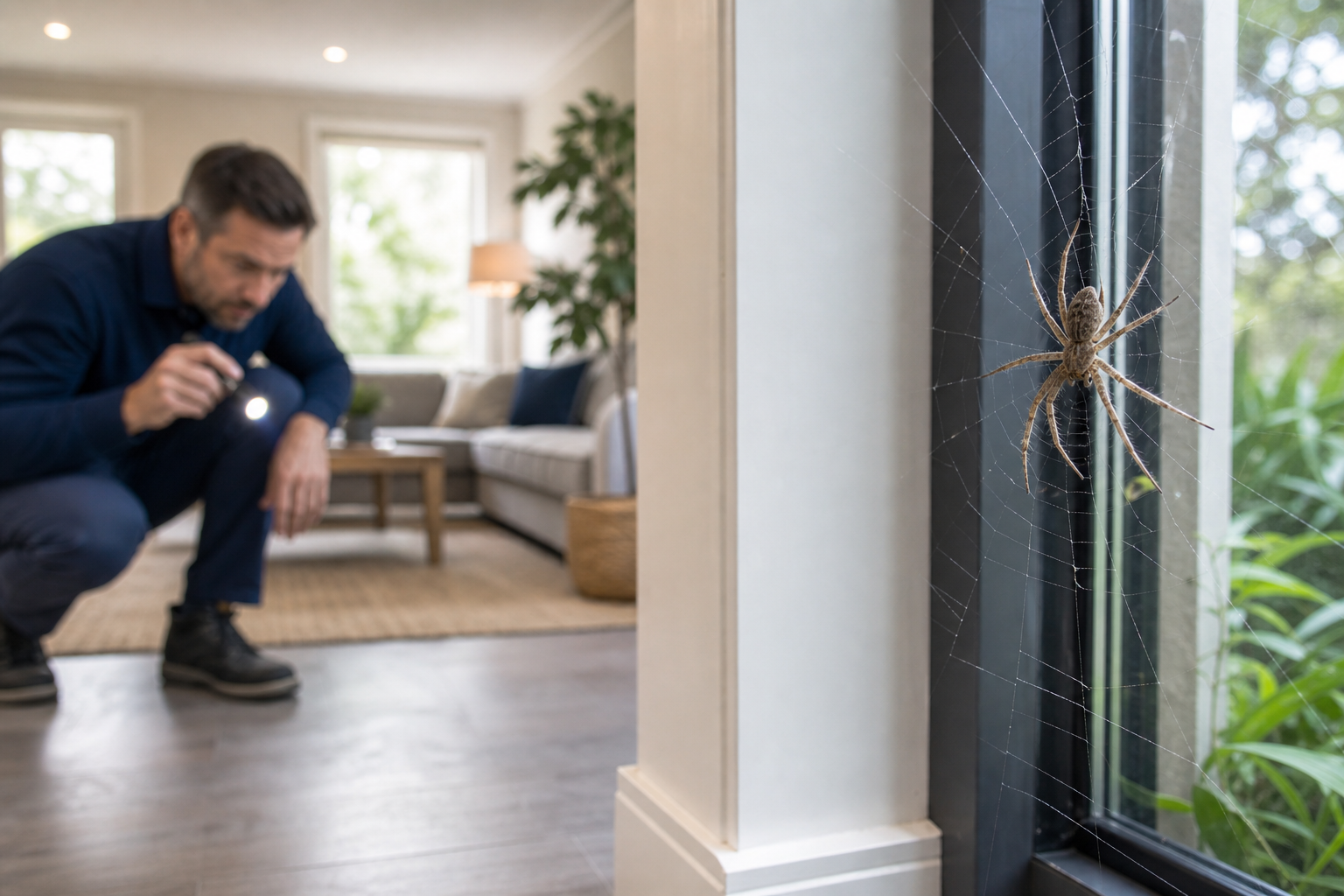
If you have seen spiders inside your home, start with a short, ordered checklist to assess risk, try safe non-chemical steps, and decide whether a professional treatment is required. This page gives a quick problem-symptom matrix, safe DIY actions with clear stop points, a simple scoring tool to guide your decision, and what to expect from a warranty-backed interior treatment.
Quick assessment: a problem-symptom matrix
Use this one-minute scan to map what you see to the likely cause and one immediate action to take.
- One or two spiders, occasional web in a corner: Likely incidental visitors. Immediate action: vacuum webs and watch. Nonurgent.
- Multiple live spiders, many webs, or egg sacs indoors: Active infestation or steady reintroduction. Immediate action: begin the DIY controls below and score your situation.
- Spiders inside walls, behind siding, or in attic cavities: Hard-to-reach population requiring inspection. Immediate action: do not attempt to access inside walls; follow safety stop points and call a pro.
- Any suspected medically significant spider bite or multiple family members bitten: Get medical attention and contact health authorities. For guidance if a bite occurs, see the National Pesticide Information Center advice to seek medical help and call poison control when needed.
These actions follow the basic guidance to identify and remove spiders, webs and egg cases, and to reduce the insects that support spiders as food sources, as advised by authoritative sources such as the National Pesticide Information Center and spiders.html.
Immediate stop points: when do not attempt DIY
Stop and call a professional if any of the following apply. These are safety-critical situations where DIY attempts risk injury, ineffective control, or hidden infestations.
- Suspected venomous species inside living spaces or repeated bites. Refer to medical advice and avoid handling.
- Spiders living in wall voids, inside exterior siding, attic insulation, or other inaccessible cavities. These often require targeted access or professional equipment.
- Large, fast-growing infestations where prior DIY attempts have not reduced sightings. Residual populations may need an integrated program.
- Households with infants, elderly people, or pets where pesticide use could pose an unacceptable exposure without professional risk assessment.
The NPIC and Health Canada emphasise identification and caution around medically important spiders and recommend professional help in high-risk situations.
Orderly DIY controls you can try now
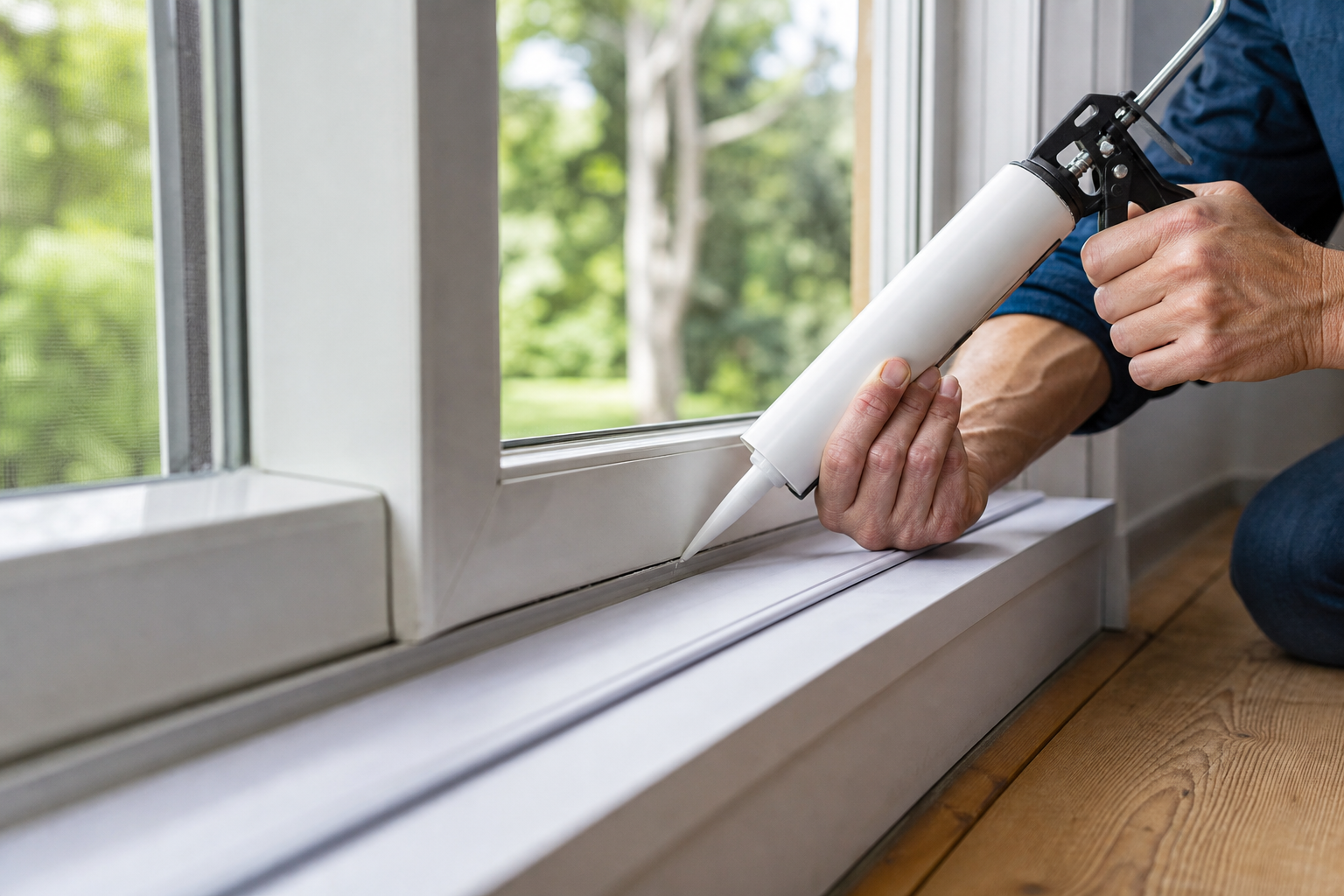
Follow these steps in order. Stop and reassess if you reach any of the immediate stop points above.
1. Identify and document
- Take clear photos of the spider, webs, and egg sacs. If you are unsure, keep a photo for reference rather than handling the spider.
- Note where you see activity: corners, baseboards, windows, attics, basements, or inside cupboards. Location helps decide the next step.
2. Remove existing spiders, webs, and egg cases
- Vacuum webs, spiders and egg sacs with a crevice tool and empty the vacuum bag or canister outdoors. This is low-risk and recommended by NPIC.
- Use a long-handled duster or broom to remove webs in high corners; remove wall-void access coverings only if safe and obvious.
3. Reduce food and hiding places
- Remove clutter, boxes, and piles of clothing from floors and corners. Spiders hide in undisturbed areas, so regular rearrangement helps. This aligns with guidance from the UC IPM program.
- Control other household insects that feed spiders. Sealing food crumbs, improving kitchen cleanliness, and using sticky traps to monitor insect prey can reduce spider food supply.
4. Seal entry points and tidy the exterior
- Seal cracks around doors, windows, and foundation using caulk, and install weather stripping. Trim vegetation away from walls and keep firewood and long grass away from the house perimeter, as recommended by extension pest resources.
- Check screens and door sweeps, and repair gaps where insects can enter.
5. Monitor with traps and recheck
- Place cardboard sticky monitoring traps along baseboards and under furniture to check for activity. The NPIC suggests sticky traps as a low-risk monitoring tool.
- Repeat vacuuming and removal weekly for three to four weeks. If activity drops, continue sanitation and monitoring.
If these steps markedly reduce sightings and you are not in a stop-point category, you can continue with prevention measures. If spiders persist or appear in hard-to-reach places, proceed to the scoring step below.
When store pesticides are appropriate and safety basics
If you decide an indoor pesticide is necessary, use only registered products and follow the label. In Canada, Health Canada notes that registered consumer products available in stores can control common spiders when infestations are severe enough to require pesticides. See the Health Canada guidance for product selection and safety instructions: Canada.ca on spiders.
Basic safety rules when using store-bought insecticides:
- Read and follow the label directions exactly, including personal protective equipment and ventilation instructions.
- Keep children and pets out of treated rooms until the product label allows re-entry.
- Do not apply indoor residual sprays into wall cavities, electrical outlets, or places not specified on the label. If you need treatments in cavities or insulation, call a professional.
For households with small children, pets, or respiratory sensitivities, consider non-chemical measures first and call a pro to discuss low-exposure options.
Score your situation: DIY or call a pro
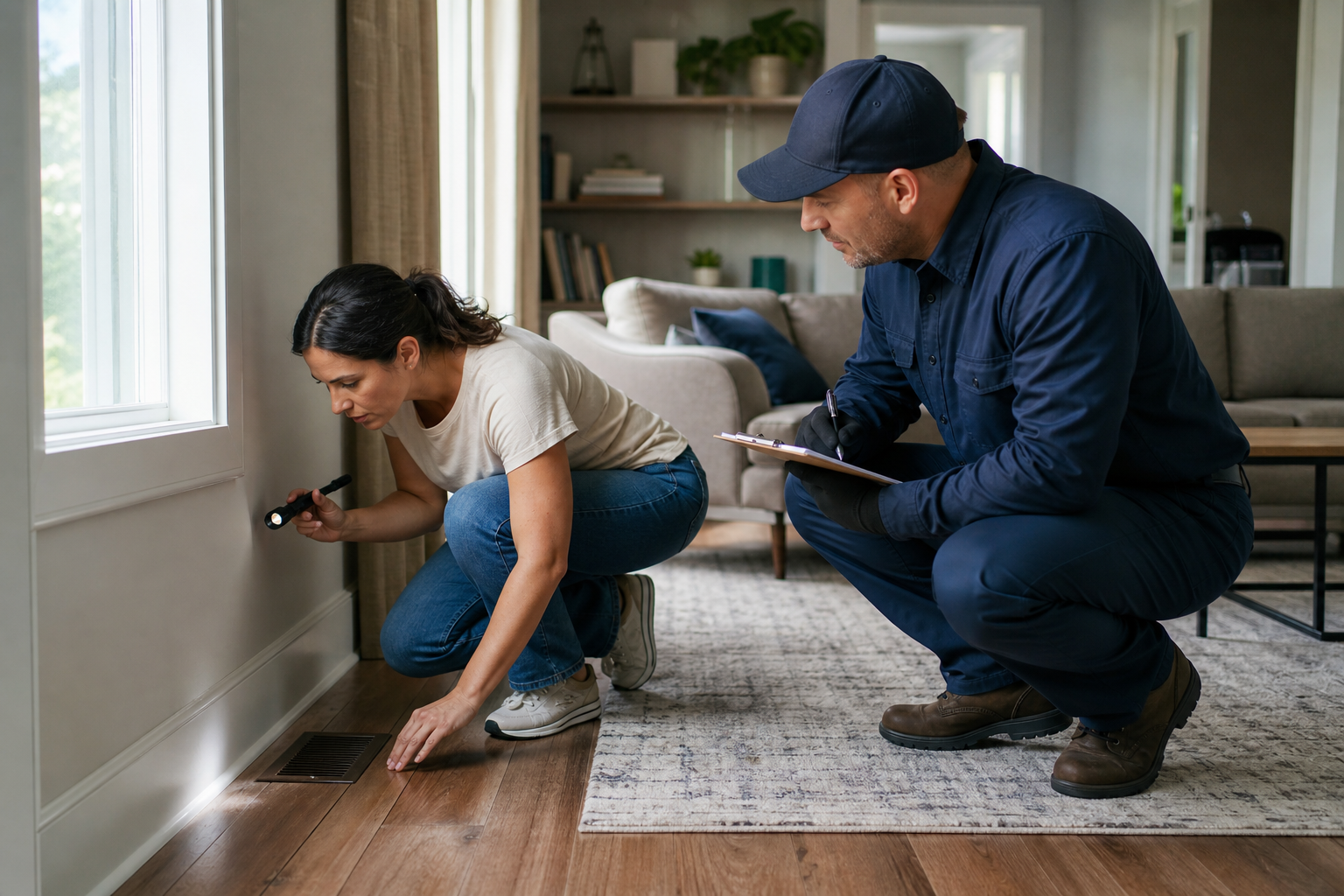
Give yourself points and total them. Total 0-4: DIY likely appropriate. Total 5-8: Consider a professional inspection. Total 9+: Call a professional with interior treatment experience.
- Infestation size: 0 = single sighting, 1 = occasional (2-5), 2 = many (6+).
- Location difficulty: 0 = visible corners, 1 = closets/attic, 2 = inside walls/behind siding.
- Health risk: 0 = no bites, 1 = occasional concern, 2 = suspected medically important species or bites.
- Prior control attempts: 0 = none yet, 1 = some DIY tried, 2 = multiple failed attempts.
- Household vulnerability: 0 = no infants/elderly/pets, 1 = one vulnerable occupant, 2 = multiple vulnerable occupants.
If your score indicates professional help, choose a provider who offers interior treatment programs and a clear warranty. Bugman Plus lists spider and wasp control among its services and advertises a three-month warranty on interior treatment programs, making warranty-backed service an option for homeowners in Oshawa. See Bugman Plus for service details: Bugman Plus.
What a professional indoor spider treatment should include
A reputable interior treatment program typically includes a full inspection to locate living populations, targeted treatment of identified areas, sanitation advice, exclusion work (sealing entry points), and a follow-up plan. Ask a prospective contractor these questions during the quote:
- Will you perform a full interior inspection and document spider locations?
- Which areas will be treated and which products will you use?
- Is a follow-up visit included and what does the warranty cover?
- How will you minimise exposure to children, pets, and indoor air during treatment?
Comparing answers lets you weigh cost against coverage and the value of a warranty-backed interior program. For homeowner-focused tips before a visit, see our blog post on spider control tips homeowners prioritize.
Common homeowner objections and how to weigh them
- Cost: Small DIY fixes are affordable, but persistent or hidden infestations often require professional labour and targeted treatments to avoid repeat visits.
- Chemical exposure: Ask a pro about low-exposure options, spot treatments, and post-treatment re-entry times; registered products and professional application reduce misuse risks (see spiders.html).
- Effectiveness: Integrated approaches that combine sanitation, exclusion, monitoring and targeted treatments are more durable than a single spray.
Next steps and local help in Oshawa
Printable checklist: follow the ordered DIY steps for two to four weeks and complete the scoring tool. If your score recommends a professional, gather these items before you call: photos, notes on locations and timing, any prior treatments tried, and household vulnerability factors.
When you are ready, request a quote from a local provider who lists interior treatment programs and a warranty. Bugman Plus serves Oshawa and the Durham Region, offers spider and wasp control, and provides a three-month warranty on interior treatment programs; request a quote or more information at the official website.
Frequently asked questions
Are spiders in my house likely to be harmful to my family or pets?
Most household spiders are harmless and can reduce other insect pests, but if you see multiple bites, an unusually large number of spiders, or a species you suspect to be venomous, seek medical advice and consider professional help. See the National Pesticide Information Center for guidance on identification and bite response: NPIC spiders.
Can I use store-bought pesticides indoors and still keep children and pets safe?
Yes, if you choose a product registered for indoor use and follow the label exactly, including re-entry intervals and ventilation. For severe infestations or when treatment in wall voids is needed, call a professional. Health Canada provides product and safety guidance: spiders.html.
How do I tell whether a spider problem needs a professional interior treatment?
Use the scoring checklist above. High scores for infestation size, inaccessible locations, suspected medically important species, repeated failed DIY attempts, or vulnerable household members indicate a professional interior program is appropriate.
What should I expect from a warranty-backed interior treatment program?
A warranty should specify what is covered, how long it lasts, and any homeowner responsibilities (for example, sanitation and follow-up visits). Bugman Plus advertises a three-month warranty on interior programs; review the provider’s written terms before you book: Bugman Plus.
Will sealing entry points and trimming vegetation stop spiders from coming inside?
Sealing cracks and trimming plants away from the house reduce reintroduction by limiting shelter and prey near your walls. These exclusion and landscape measures are recommended by extension services as part of an integrated approach and are effective when combined with sanitation and monitoring.
If you want a local inspection or a warranty-backed treatment quote, contact Bugman Plus for more information and to request a visit.


