
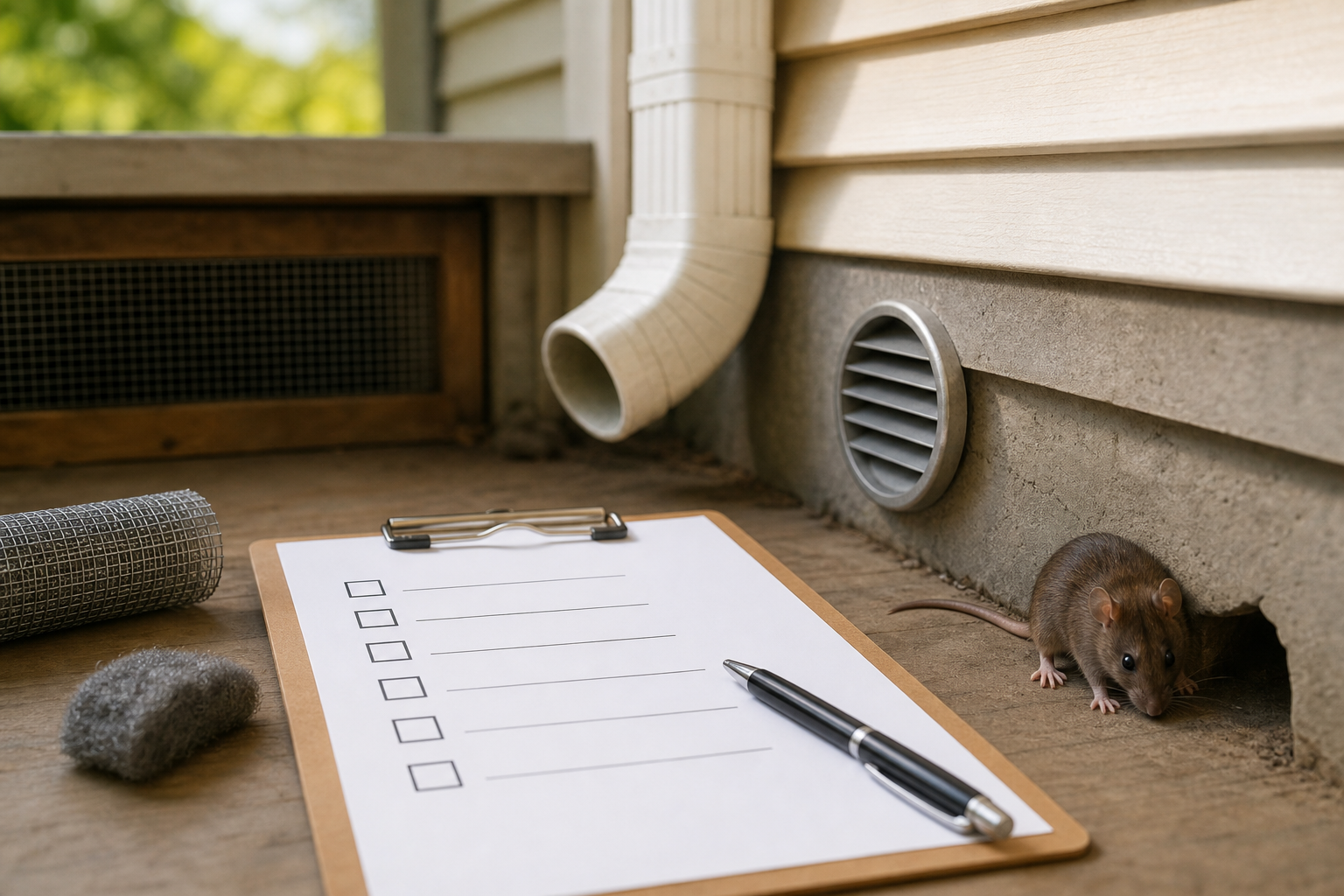
Stopping rodents before they move in is simpler, cheaper, and cleaner than dealing with a full infestation. This rodent prevention checklist gives you a practical, repeatable plan to block entry points, remove food and shelter, and monitor early warning signs so you can act quickly. Work through the sections in order, then set a simple cadence to keep your home tight and uninviting to mice and rats.
Prioritize your rodent prevention checklist
If time is short, do these in order. Each step removes a major risk factor.
- Seal exterior gaps and utility penetrations that are 6 mm (1/4 inch) or larger for mice and 12 mm (1/2 inch) or larger for rats.
- Install door sweeps and weatherstripping; check garage and side doors for daylight.
- Store all edible items (including pet food and bird seed) in hard, sealed containers.
- Eliminate clutter, especially cardboard and fabric piles that provide nesting material.
- Set up passive monitoring (snap traps or mechanical traps) in non-living areas.
- Maintain the yard: trim vegetation away from the structure and elevate stored materials.
Seal your home envelope
Exclusion is the core of any durable prevention plan. Rodents exploit small, repeatable gaps around the shell of a building. Use sturdy materials and focus on recurring stress points that expand and contract with the seasons.
- Foundation and siding transitions: Fill gaps or cracks with a combination of steel wool (or copper mesh) packed tightly, then cap with high-quality exterior sealant. Avoid relying on foam alone; it is easy to gnaw.
- Utility penetrations: Inspect where gas, electrical, cable, and HVAC lines enter. Seal annular spaces with metal mesh and sealant. Use escutcheon plates where appropriate.
- Exterior doors: Install metal or heavy-duty rubber door sweeps so no light shows at the threshold. Replace brittle or compressed weatherstripping on jambs and headers.
- Garage and overhead doors: Adjust tracks and seals so the bottom gasket fully meets the slab. Add a rodent-resistant bottom seal if needed.
- Windows and vents: Repair torn screens. Cover crawlspace, attic, and dryer vents with 6 mm (1/4 inch) hardware cloth, secured with screws and washers.
- Roofline and eaves: Reattach loose soffits and fascia. Cap chimneys with a secure, screened cap designed for your flue type.
- Decks and additions: Where framing meets the main structure, screen off hidden cavities and close ledger gaps.
- Gaps under siding: Where utilities or hoses exit beneath lap siding, backfill with copper mesh and sealant so the opening cannot be enlarged.
Tip: Move clockwise around the building at ground level, then repeat at mid-height and roofline. Photograph each fix so you can compare season to season.
Remove attractants inside and out
Even the best sealing can be undone by easy meals and cozy nesting spots. Cut off food, water, and shelter so scouts don’t report back that your home is worth the effort.
Kitchen and pantry
- Transfer dry goods (cereal, rice, flour, nuts, pet food) into rigid, airtight containers.
- Wipe up crumbs and grease daily; clean under appliances and along kick plates monthly.
- Rinse recyclables and take out garbage before it overflows; use bins with tight lids.
Storage areas (basement, garage, closets)
- Replace cardboard boxes with lidded plastic totes. Label and elevate off floors.
- Keep textiles, camping gear, and seasonal decor sealed to deny nesting material.
- Maintain 5–8 cm (2–3 inches) of visible floor margin along walls for easy inspection.
Yard and exterior
- Trim shrubs and branches so they don’t touch the structure; maintain a 30–45 cm (12–18 inch) clear perimeter.
- Keep mulch thin near the foundation and consider a gravel strip to reduce harborage.
- Store firewood and lumber at least 30 cm (12 inches) off the ground and away from walls.
- Secure compost, bird seed, and barbecue drippings; clean grill trays after use.
- Fix leaks and remove standing water in planters, gutters, and low spots.
Maintain doors, windows, and utilities
Wear-and-tear creates new openings. Add these items to your routine maintenance to prevent new gaps from forming.
- Weatherstripping: Inspect each exterior door seasonally; replace compressed foam and brittle seals.
- Thresholds: Ensure screws are tight and the sweep contacts the surface evenly along the entire width.
- Window screens: Patch or replace torn mesh; verify frames seat fully into tracks.
- Gutters and downspouts: Clear debris so water doesn’t pool near the foundation where rodents burrow.
- HVAC lines and condensate drains: Re-seal openings and secure drains with screens that allow flow but block entry.
Set up smart monitoring
Monitoring shows whether prevention is working and where to focus next. Keep it simple and consistent.
- Placement: Put mechanical traps (e.g., snap traps) perpendicular to walls with the trigger against the wall. Target utility runs, behind appliances, and dark edges.
- Attractants: A pea-sized amount of peanut butter or nut/chocolate spread works well; secure the bait so it can’t be stolen without triggering.
- Safety: Place traps where children and pets cannot access them. Check at least every 24–48 hours when active.
- Tracking patches: A light dusting of flour or non-toxic tracking powder near suspected paths can reveal footprints.
- Logbook: Record dates, locations, captures, and sightings. Patterns point to entry points you may have missed.
Recognize early warning signs
Catching activity early keeps problems small. Walk your home with these signs in mind.
- Droppings: Small, pointed at both ends (mice) vs. larger, blunt (rats). Fresh droppings are dark and soft.
- Gnaw marks: New marks are lighter in colour; look on baseboards, food containers, and around holes.
- Rub marks: Greasy smears along runways and openings where bodies brush repeatedly.
- Noises: Scratching or scurrying, especially at night in walls, ceilings, or under floors.
- Burrows: Holes 5–8 cm (2–3 inches) in soil near foundations, sheds, or under steps.
- Nests: Shredded paper, insulation, or fabric tucked into cavities or quiet corners.
Seasonal rodent checks
Different seasons stress different parts of your home. Use this cadence to stay ahead.
- Early fall: Re-seal gaps opened by summer drying. Add or refresh door sweeps before cold weather drives rodents indoors.
- Mid-winter: Inspect interior mechanical rooms and utility chases for new rub marks or droppings; cold snaps can shift materials and open seams.
- Early spring: Repair storm damage at rooflines and vents; clear gutters and re-grade soil that settled against the foundation.
- Early summer: Thin vegetation, service screens, and elevate stored items before peak outdoor activity.
Room-by-room prevention
A targeted sweep helps you find what general inspections miss.
- Kitchen: Seal gaps around plumbing under sinks with escutcheon plates and sealant. Install kick-plate covers where missing.
- Bathroom and laundry: Check dryer vents and drain line exits; tighten hose penetrations.
- Basement and crawlspace: Screen floor drains, insulate and secure rim joist penetrations, and keep storage elevated.
- Attic: Reattach soffit baffles, seal around wiring through top plates, and keep pathways clear for inspection.
- Garage: Seal expansion joints at wall edges, close gaps at the bottom corners (often the first failure point), and store food and seed in sealed bins.
Quick response if you find activity
Swift, contained action prevents a few intruders from becoming a colony.
- Identify the likely route (along walls, pipes, and shadow lines) and set multiple traps 2–3 metres apart along that path.
- Seal the most obvious gap the same day, even with a temporary fix (mesh + sealant) while you plan a permanent repair.
- Continue monitoring for at least two quiet weeks after the last sign of activity.
Tools and materials you’ll use
Having the right supplies makes prevention faster and more durable.
- Steel wool or copper mesh for packing gaps
- Exterior-grade sealant and a caulking gun
- 6 mm (1/4 inch) hardware cloth, tin snips, screws, and washers
- Door sweeps and weatherstripping
- Rigid, airtight storage containers
- Mechanical traps and non-toxic attractants
- Work gloves, flashlight/headlamp, and a measuring tape
- Notebook or phone app for a monitoring log
Monthly 5-minute routine
A quick monthly pass keeps prevention on track with minimal effort.
- Walk the exterior: Look for new holes, gnawing, or disturbed soil along the foundation.
- Check door sweeps and weatherstripping for light leaks.
- Glance at traps in non-living areas; refresh attractant if dried out.
- Empty small clutter hotspots and wipe pantry shelves.
Frequently asked questions
How small a gap can a mouse or rat use to get inside?
Mice can exploit openings around 6 mm (1/4 inch)—about the size of a pen. Rats typically need around 12 mm (1/2 inch) or more. If you can slide a pencil into a gap, treat it as a potential entry point and seal it with metal mesh plus sealant or a rigid repair.
Should I use foam to seal rodent entry points?
Expanding foam by itself is easy to gnaw. If you use foam, first pack the void tightly with steel wool or copper mesh, then cap it with foam or, better yet, an exterior-grade sealant. For larger or high-wear openings, install metal flashing or hardware cloth for a more permanent fix.
What’s the safest way to monitor for rodents around kids and pets?
Use mechanical traps placed in locations that children and pets cannot access—inside locked stations or out of reach in utility areas. Check traps frequently and avoid placing any device in living spaces where it could be disturbed. Always read and follow product instructions carefully.
How long should I keep traps set if I don’t catch anything?
Keep passive monitoring in place in non-living areas year-round, but reduce checks to monthly if there’s no activity. If you see fresh signs (droppings, gnawing), increase checks to daily or every other day until it’s quiet for at least two weeks.
Is bird feeding a problem for rodent prevention?
Spilled seed is a strong attractant. If you feed birds, use catch trays, clean beneath feeders regularly, and store seed in sealed, rigid containers away from the home’s perimeter.
Your next step
A practical next step
To discuss the options that apply to your situation, contact Bugman Plus and request the relevant details before moving forward.


