
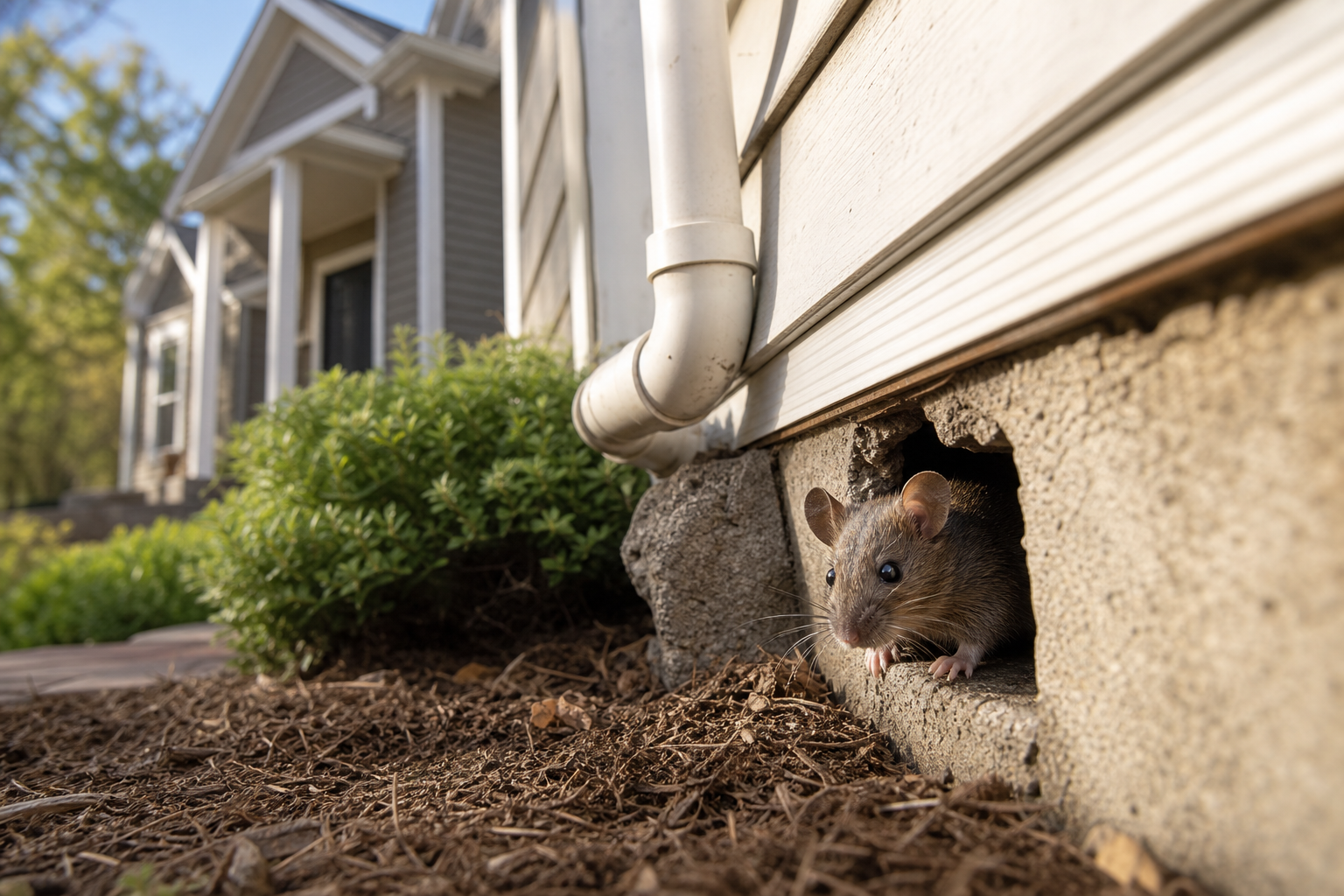
Finding where mice or rats are getting into your house is the first step to preventing an infestation. This article lists nine commonly missed rodent entry points homeowners often overlook, explains the active signs that mean an opening is in use, flags DIY fixes that fail, and gives clear triggers for when to call a local exterminator. The goal is a short, practical checklist you can use on a single walk around your property.
Nine commonly missed rodent entry points to scan first
1. Foundation cracks, weep holes and veneer gaps
Small foundation cracks, mortar gaps and masonry weep holes are easily ignored but rats and mice can squeeze through surprisingly small openings. Inspect low on the wall and around the foundation line, especially where different materials meet. Health Canada advises removing easy entry points as the first line of defence against rodents, so treat foundation gaps as a priority Health Canada.
2. Gaps where utilities and pipes enter the building
Pipes, conduits and cable entries often leave irregular gaps. A hole around a drain pipe or HVAC line can be an open welcome for rodents. Look for gaps at ground level and at the sill plate where exterior utilities meet the structure. Pest professionals note rodents will expand a gap by gnawing, so even a small opening deserves attention Palisade Pest.
3. Dryer vents, bathroom vents and loose vent covers
Vents with broken or loose covers are a frequent access point. Check dryer vents and bathroom exhausts for damaged screens and for gaps between the vent and the wall. Replace torn mesh and fit rodent-rated vent covers where necessary to stop persistent access.
4. Roof to wall junctions, soffits and fascia gaps
Where the roofline meets the wall is a classic blind spot. Missing soffit panels or gaps behind fascia can provide a route into eaves and attics. Critter Control warns roof openings are common for roof rats and other climbing rodents, so watch the roofline carefully Critter Control Canada.
5. Attic vents, gable vents and ridge vents
Attic vents with torn screening or unsecured collars let animals into the attic void. Inspect gable vents, turbine vents and ridge vents from both inside and outside for gaps and damaged mesh. Use a ladder safely and have someone hold it when examining high vents.
6. Gaps under sliding doors and garage doors
Weather stripping that is worn or missing, and gaps under doors are easy routes for small rodents. Sliding doors and older garage doors often develop uneven sills that invite entry. Check for draft and daylight by shining a torch at the base from inside to confirm access.
7. Spaces under porches, decks and exterior staircases
Hidden voids beneath decks, porches and stairs are attractive nesting areas. Look for disturbed soil, runways in vegetation and gaps where skirting or lattice does not meet the ground. These areas are often overlooked because they feel out of sight, out of mind.
8. Gaps around window frames and ripped or loose screens
Window screens and frame seals can deteriorate and leave finger width holes. Inspect the perimeter of all windows, especially in basements or lower-ground rooms. Even small tears at the corner of a screen make a convenient entrance.
9. Openings hidden by landscaping, siding or external storage
Shrubs, stacked firewood and siding offsets can hide holes at the base of a wall. Move plantings away from the foundation and check behind stored items for concealed gaps. Dense vegetation also creates sheltered runways that lead rodents to hidden entry points.
How to inspect these spots safely and efficiently
When to do the inspection
Do a daylight walk around to spot exterior gaps and a brief inside check after dark for noises if you suspect activity. The Centres for Disease Control recommends sealing openings and inspecting around pipes and vents as part of a regular prevention routine CDC. If you hear scratching at night, a targeted night check can help confirm location.
Tools and documentation to bring
- Flashlight and headlamp
- Extendable inspection mirror or smartphone camera for tight or high spaces
- Measuring tape or ruler to estimate gap width
- Gloves and a notepad or phone to photograph and log findings
How to test and record a suspicious opening
From inside, shine a bright light into the suspected gap and watch for daylight showing through. Photograph the opening and note its location, estimated size and whether you find gnaw marks, droppings or grease marks nearby. If a ladder is required, follow safe ladder practices and avoid working alone. Do not handle droppings directly; use gloves and avoid creating dust.
Which signs show an opening is actively used by rodents
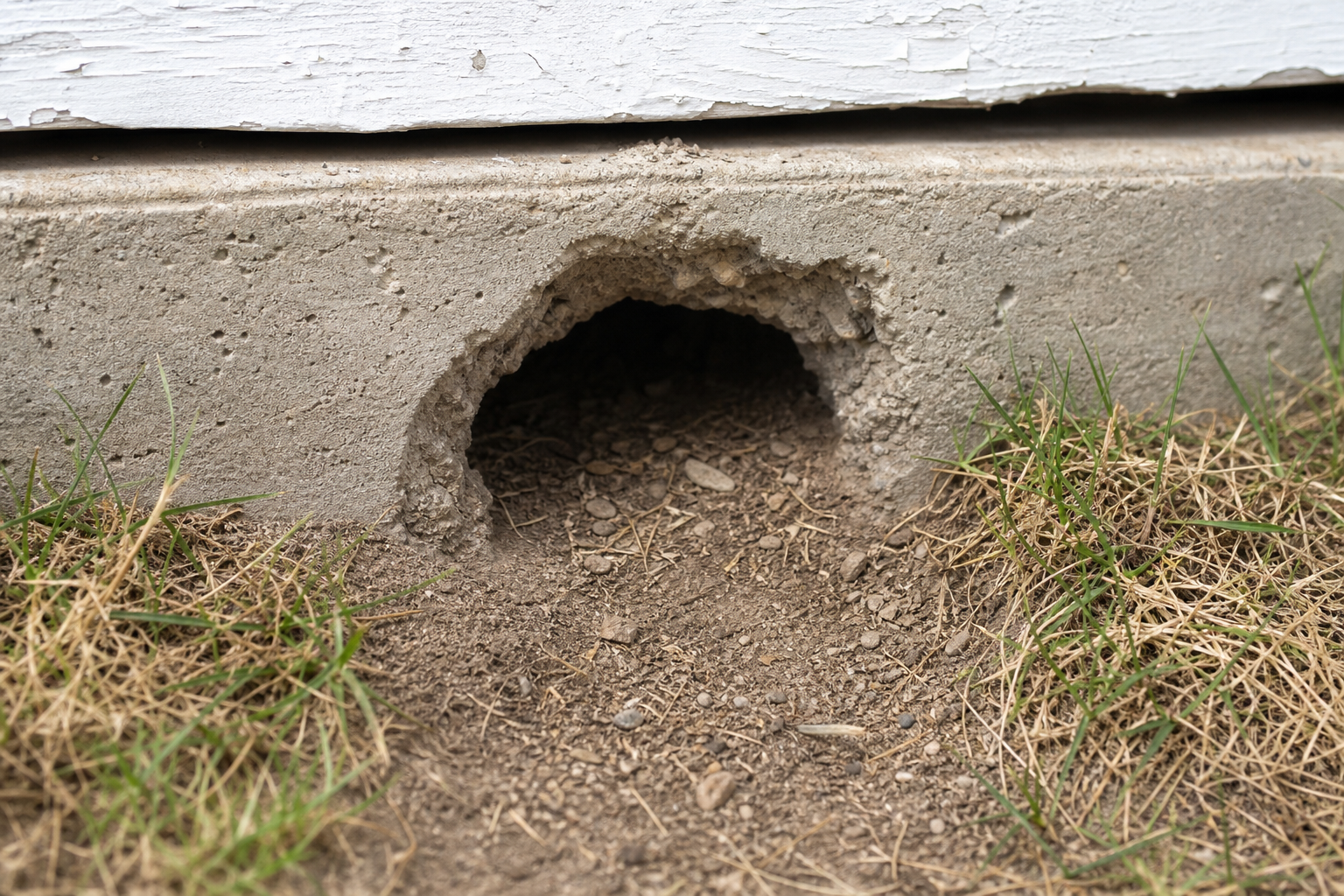
Fresh gnaw marks and expanding gaps
Freshly chewed wood or plastic and newly widened gaps mean rodents are actively enlarging an access point. Pest pros note gnawing is an ongoing process so small holes can become large ones quickly Palisade Pest.
Greasy rub marks and runway paths
Rodents leave oily fur marks along regular travel routes. Look for dark smears at edges, door frames and along baseboards near suspected openings. Grease marks are a strong indicator that animals are moving the same route repeatedly.
Fresh droppings, nesting material and urine odour
Fresh droppings near an opening are a clear indicator of recent activity. Nesting materials pushed into voids or soft insulation suggest rodents are using the space for shelter. Health Canada recommends securing possible entry points when such signs are present Health Canada.
Tracks, burrows and damaged insulation or wiring
Footprints in dusty areas, burrows at the foundation base, or chewed insulation and wiring are high risk signs that demand a decisive response. Chewed wiring is not just a pest issue, it is a fire and safety hazard.
DIY mistakes that leave holes open and what to use instead
Relying on plain caulk or low density spray foam
Homeowners often use standard caulk or soft spray foam as a quick fix. Rodents can chew through those materials and reopen the hole. One Man and a Ladybug warns that caulk and low density foam may be insufficient because rodents will gnaw them away One Man and a Ladybug. A better sequence is to pack stainless steel wool or copper mesh into the cavity, then finish with cement, metal flashing or hardware cloth for a durable seal.
Patching from the interior only
Sealing only inside can leave exterior access intact and can trap rodents inside wall voids. Where possible, make a weather resistant exterior repair and follow with interior sealing. Exterior work also eliminates sheltered approaches that draw animals back later.
Ignoring vents and screens or using non-rated covers
Temporary plastic covers and torn screens do not stop determined rodents. Install rodent rated vent covers and metal collars around pipe entries to provide a robust, long lasting barrier. For a professional overview of exclusion approaches see Bugman Plus rodent exclusion methods rodent exclusion methods.
Red flags that mean stop DIY and call a local exterminator
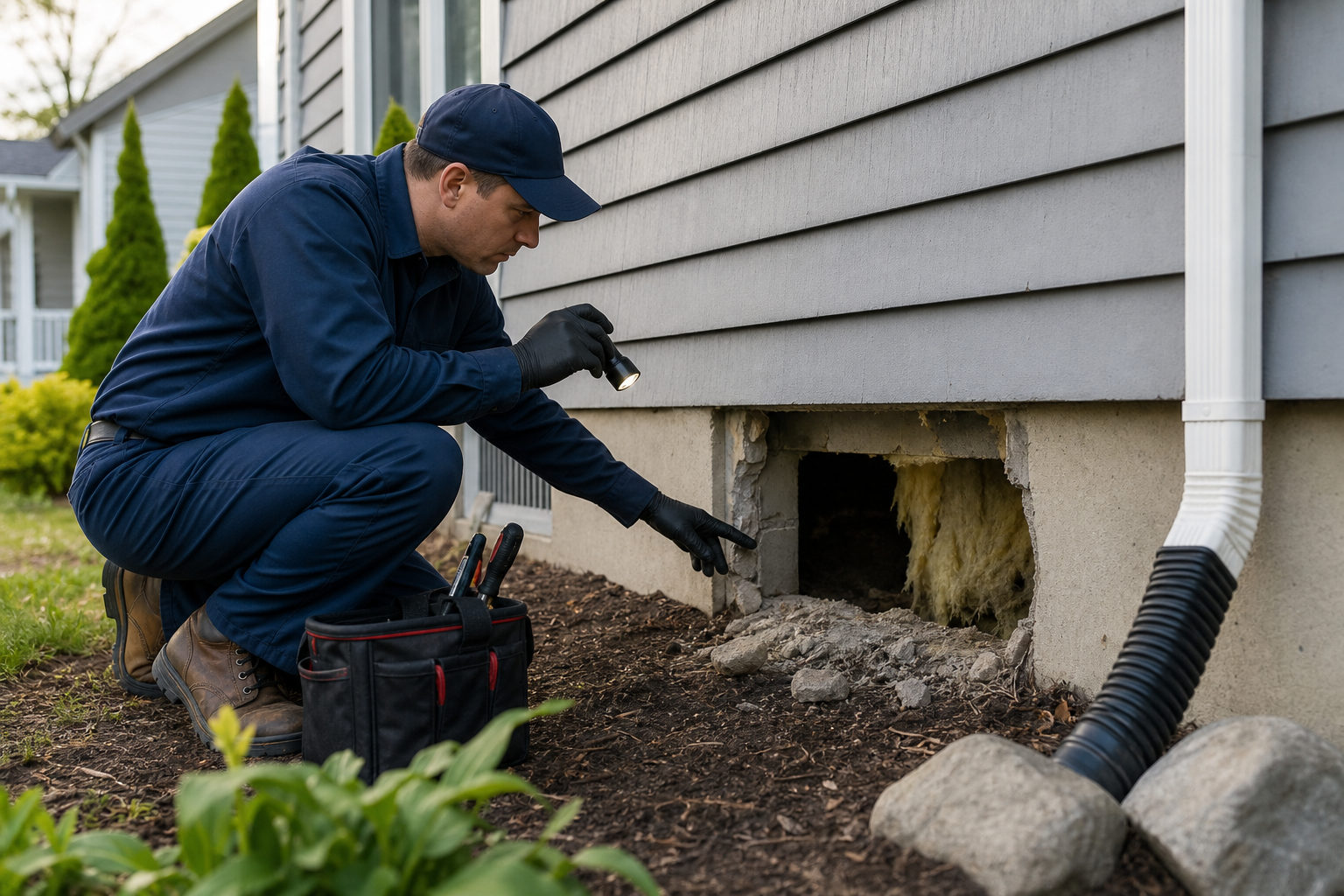
Multiple active entry points or rapidly expanding gaps
If you find several active openings, or gaps that appear to be enlarging quickly, professional exclusion is recommended. Multiple entry points often indicate an established population rather than a single intruder.
Gnawing on structural timbers or electrical wiring
Chewed supports or wiring create safety and fire risks. Stop DIY attempts and call a pro who can combine exclusion with necessary repairs and safety checks.
Activity inside living spaces, attics or HVAC
When rodents are active in bedrooms, attics or ductwork prioritise a professional inspection. Rodents in HVAC systems can spread contamination and complicate remediation.
Recurrence after recent repairs
If the problem returns despite your fixes, a trained technician can locate hidden voids, wall entries and other complex access routes and apply durable exclusion materials and monitoring plans.
Ontario and Canada context homeowners should know
Official prevention guidance
Health Canada recommends rodent proofing as the first line of defence and removing easy entry points to make a home less appealing to rodents Health Canada. Ontario guidance also highlights common points around doors, windows, vents and utility hook ups as places to inspect and secure Ontario.
When to contact local public health or services
Contact your municipal health unit if you suspect a public health risk, or if you find evidence of large rodent populations near food storage or communal areas. Local bylaws may also govern safe disposal of carcasses and contaminated materials.
Decision checklist: seal it yourself or hire an exterminator in Oshawa
Quick decision points
- If the opening is small, isolated and you can access both interior and exterior, you can perform a durable repair using metal mesh, cement or flashing.
- If you find active gnawing, nests, droppings inside living spaces, chewed wiring, or multiple points of entry, schedule a professional inspection right away.
- If the opening is behind siding or inside wall voids, or if repairs require roofing or structural work, call a licensed pest control and exclusion specialist.
Bugman Plus provides local rodent control services in Oshawa and offers comprehensive exclusion work and interior programs backed by a warranty. For homeowners who need professional sealing or monitoring visit Bugman Plus for more information Bugman Plus and review their rodent exclusion tips rodent exclusion methods.
Frequently asked questions
How small of a hole can rodents squeeze through and should I seal every tiny gap?
Mice can fit through holes as small as a dime and rats through slightly larger gaps. Because rodents can enlarge openings by gnawing, seal gaps you can access and document very small holes for monitoring. Health Canada stresses removing easy entry points as the first line of defence Health Canada.
Will caulking or spray foam keep mice and rats out permanently?
Plain caulk and low density spray foam are often chewed through. A more durable approach is to combine tightly packed stainless steel wool or copper mesh with metal flashing, mortar or hardware cloth. One Man and a Ladybug cautions that soft materials may not be enough One Man and a Ladybug.
What immediate steps can I take tonight if I find a suspected entry point?
Remove food and pet food from the area, clear vegetation from the foundation, set temporary traps if you are comfortable doing so, and block visible gaps with heavy gauge materials until a permanent repair is possible. Avoid handling droppings and always wear gloves.
When is rodent activity serious enough to call an exterminator in Oshawa?
Call a professional if you find multiple active access points, evidence of nesting inside the home, chewed wiring, or if the problem persists after your repairs. Professionals can locate hidden entries and perform exclusion and remediation safely.
Which materials do professionals use to seal rodent entry points for the long term?
Professionals commonly use stainless steel wool or copper mesh to fill cavities, then cover with cement, metal flashing or 1/4-inch hardware cloth. They also install rodent-rated vent covers and metal collars around pipes to ensure longevity.
Bugman Plus can inspect and seal rodent entry points with warranty backed interior programs that focus on durable exclusion and rapid response. Would you like Bugman Plus to check the nine spots listed around your home now?


