
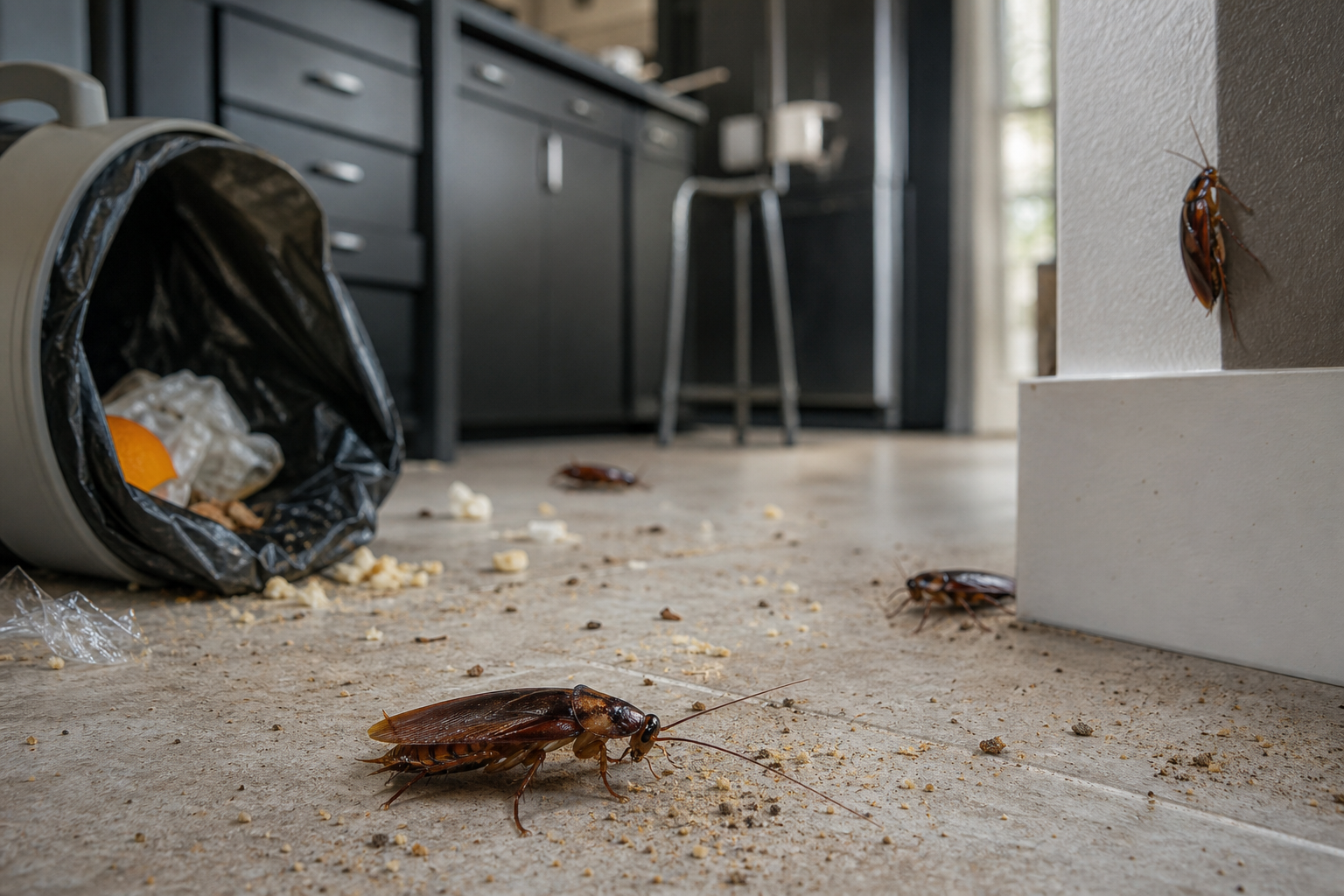
Homeowners who see a cockroach or find droppings often ask whether cleaning will be enough. In plain terms, cockroach sanitation issues are the food, water, shelter and clutter conditions in and around a home that make it easy for cockroaches to survive, breed and spread contaminants. This article explains why sanitation matters, gives a short inspection checklist you can use in 10 to 15 minutes, lists immediate fixes you can do today, and explains when sanitation alone is unlikely to solve the problem.
Why sanitation matters for cockroach control and home health
Cockroaches do not need to bite to cause harm. They can physically carry bacteria and other contaminants on their bodies and in their faeces, increasing the risk of food contamination and allergens in the home. Public health guidance identifies sanitation as a primary strategy to reduce exposure and limit pest populations; see the Erie County Department of Health for practical monitoring and cleaning advice (Erie County Department of Health).
Scientific reviews reinforce that cockroaches are urban pests and potential vectors of pathogens and antimicrobial resistance. These reviews recommend an integrated pest management approach that combines sanitation, structural exclusion, monitoring and targeted treatments because relying on one method alone often fails in the long term. For deeper context see the NIH review on cockroaches as vectors and a recent review of urban pest management strategies (PMC/NIH review, ScienceDirect review).
Sanitation reduces the food and water that sustain cockroaches, lowers allergen loads that can affect people with asthma, and limits the places cockroaches use to hide and breed. It is the foundational step in any sustainable control plan and improves the effectiveness of monitoring and professional treatments when they are necessary.
Six inspection cues that point to sanitation-related cockroach problems
Use this exact six-point checklist during a brief sweep of the kitchen, pantry and high-risk areas. Each cue is practical and repeatable. If you find one or more items on this list, focus on the matching immediate fixes below and monitor the result.
- Visible droppings or pepper-like specks near cupboards, behind appliances or in drawers
- Shed skins, egg cases or unusual, persistent odours in cabinets and behind appliances
- Accumulations of food debris or sticky spills under furniture, behind the fridge or inside cupboards
- Accessible pet food left out overnight or open dry-food bags in the pantry
- Persistent moisture from leaking pipes, condensation under sinks or standing water near drains
- Clutter, cardboard stacks or boxes stored against walls that provide hiding places and breeding sites
For monitoring tools and the role of glue traps, see the practical guidance from the Erie County Department of Health. If multiple cues appear in more than one room, sanitation alone will likely need to be paired with other measures.
Inspection cue details
Each cue above has a clear meaning you can act upon immediately.
- Droppings: Fresh or dark droppings usually indicate recent activity and a nearby harbourage. Look along baseboards, inside cabinets and on the backs of shelves.
- Shed skins and egg cases: These indicate reproduction. Finding them means there are multiple life stages present and a higher likelihood of ongoing infestation.
- Food debris: Crumbs, grease and sticky residues in hidden spots are reliable attractants. Check under toaster ovens, behind the fridge and at the back of lower cabinets.
- Pet food and open packages: Even small nightly access to food will sustain roaches. Keep pet feeding areas tidy and seal food containers.
- Moisture problems: Cockroaches need water. Fix slow leaks and dry damp areas; even condensation in crawlspaces can support populations.
- Clutter and cardboard: Cardboard retains moisture and provides protected edges and tunnels roaches use to hide and breed. Replace cardboard storage with plastic bins when possible.
If you want a local read on sanitation and treatment connections, Bugman Plus provides a practical overview that ties housekeeping actions to professional cockroach control and sanitation approaches; see their local post on cockroach control and sanitation (cockroach control and sanitation).
Six immediate sanitation fixes you can do today
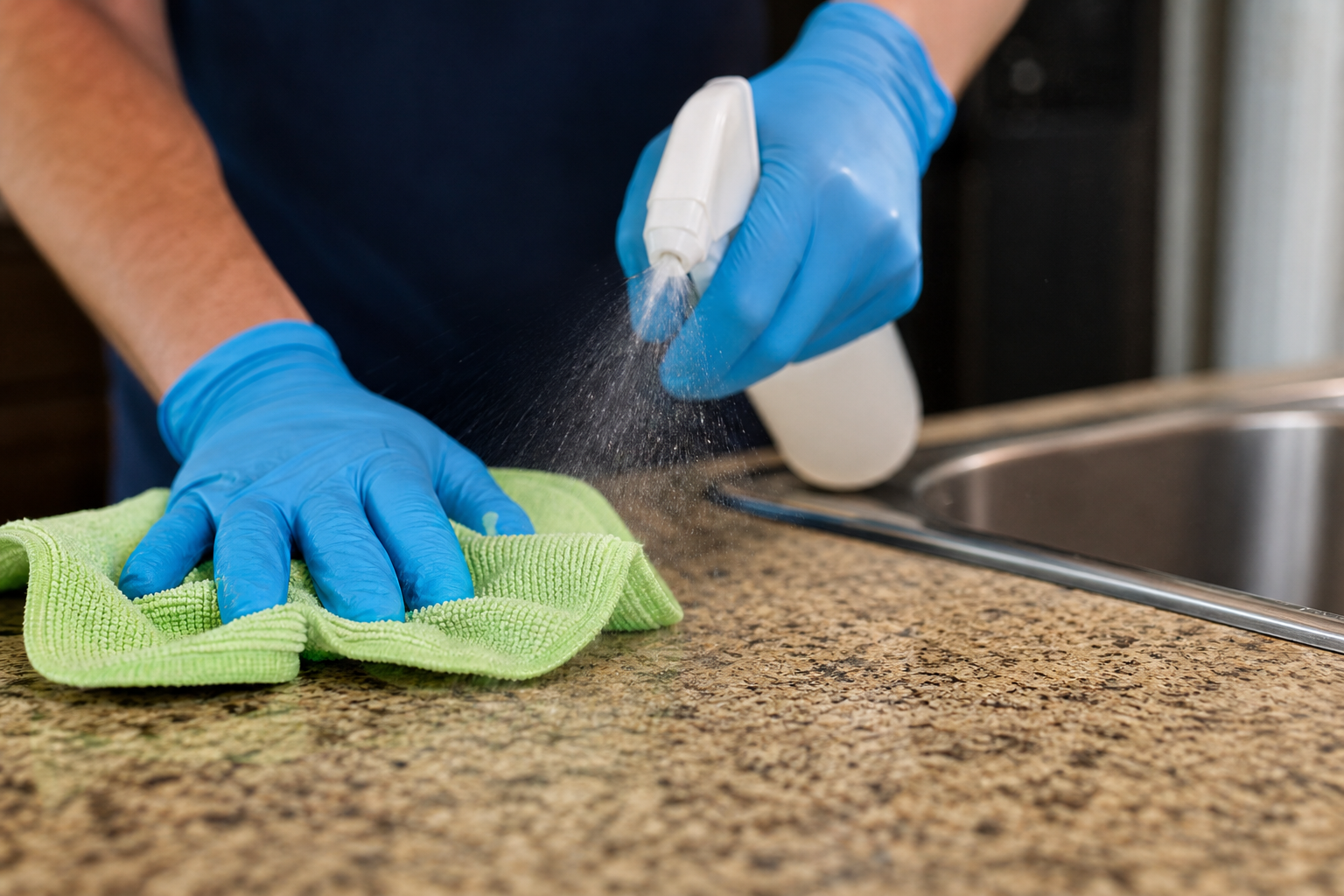
These six actions are low cost and intended to reduce attractants quickly. Combine them with monitoring to see whether activity drops over a few days.
- Clear food debris: Wipe counters, sweep and vacuum under appliances and furniture. Dispose of collected debris in a sealed bin and remove it promptly from living areas.
- Secure food storage: Move dry goods into airtight containers and keep pet food sealed and off the floor overnight, especially in the evening when roaches forage.
- Remove standing water: Fix or isolate leaking taps and pipes. Dry under sinks and use fans or a dehumidifier where condensation collects.
- Seal easy access: Temporarily block gaps around pipes under sinks with steel wool or appropriate caulk until permanent repairs can be arranged. Focus on gaps larger than 6 mm where cockroaches can pass.
- Reduce clutter: Move cardboard away from walls, limit stored paper or boxes in high-humidity areas and store seasonal items in sealed plastic bins.
- Place monitoring traps: Put a few glue traps near baseboards, behind the fridge and in cupboards to track activity and identify hotspots. Check them daily, record catches and reposition traps if necessary.
Glue traps are a low-toxicity monitoring method and can show whether sanitation is reducing activity. They are not a long-term control method by themselves, but they help determine whether further measures are needed.
When sanitation alone is unlikely to solve the problem
Sanitation is necessary but not always sufficient. Expect limits in these common situations:
- Established infestations: Many hiding sites and breeding adults across multiple rooms can overwhelm sanitation alone.
- Structural harbourage: Voids in walls, gaps behind siding or inaccessible crawlspaces allow cockroaches to move and reproduce undisturbed.
- Neighbourhood or building sources: Shared walls, basements or adjacent properties with heavy infestations can continually reintroduce pests.
- Insecticide resistance: Resistance can reduce the effectiveness of single-method chemical controls and make integrated strategies necessary for lasting control.
Reviews of urban pest management recommend integrated pest management combining sanitation, exclusion, monitoring and targeted baiting or treatments for sustainable results. When structural issues or building-level infestations are present, a coordinated approach is often required.
Decision criteria: when to keep trying sanitation and when to call a pro
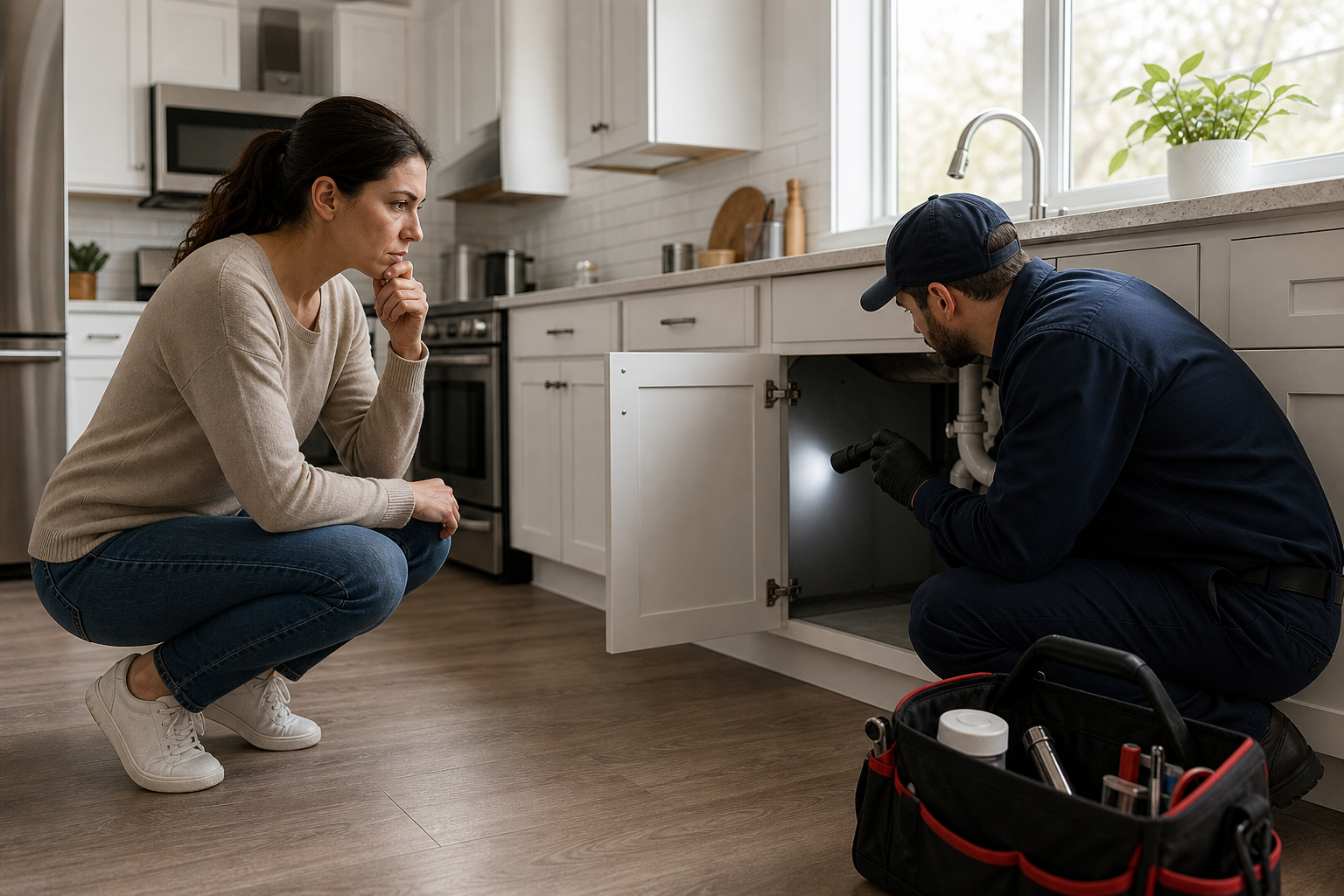
Use these objective signals to decide between more DIY sanitation or contacting a licensed pest control provider in Oshawa.
- Keep working on sanitation if you see only occasional single sightings, no egg cases or shed skins, and glue traps show decreasing activity after one week of fixes.
- Contact a professional if you find egg cases or shed skins, droppings in multiple rooms, persistent nightly sightings, or glue traps show steady or increasing catches over two weeks.
- Also consider calling a pro if sources are structural, if neighbours or building-level problems exist, or if you prefer a warranty-backed plan to combine sanitation with targeted interior treatment.
Bugman Plus offers interior treatment programs that are backed by a three-month warranty, which provides scheduled follow-ups and corrective work during the warranty period. Combining homeowner sanitation with a warranty-backed professional plan can speed recovery and reduce the chance of re-infestation.
Real objections homeowners raise and how to evaluate them
These are common concerns and practical responses to help you choose a reasoned path.
- Cost: DIY sanitation is low cost, but when infestation is established, repeated time and product purchases often exceed the cost of a targeted professional plan that combines exclusion and monitoring.
- Chemical safety: Licensed providers use targeted baits and placements to limit exposure. Integrated plans reduce broad spray use and focus on monitored, low-risk placements.
- Will sanitation be enough: It can be when the problem is early and limited. If indicators show breeding or persistent activity, sanitation should be paired with exclusion and professional monitoring.
- Warranties: A warranty does not promise immediate eradication but ensures follow-up visits and corrective work within the warranty period. Ask for written warranty terms before treatment.
Local resources and next steps for Oshawa and Durham Region residents
For general Canadian pest-control guidance, consult Health Canada’s pest information pages for safe product use and prevention tips. If you want a practical, local path forward:
- Print the six-point inspection checklist above and perform the sweep yourself.
- Apply the six immediate fixes and place a few glue traps to monitor activity for 7 to 14 days, documenting catches and locations.
- If activity remains or you find reproduction signs, consider a professional assessment. Bugman Plus offers local cockroach control and interior treatment programs with a three-month warranty and on-site consultation to combine sanitation with targeted control. Learn more on the Bugman Plus website (Bugman Plus) or read their post on cockroach control and sanitation (cockroach control and sanitation).
Frequently asked questions
What exactly are cockroach sanitation issues and why should I care?
Cockroach sanitation issues are the conditions that provide food, water and shelter for cockroaches. They matter because they sustain populations, increase the chance of contamination in food preparation areas, and make eradication harder without environmental changes. Public health guidance highlights sanitation as a primary preventive step (Erie County Department of Health).
Can better sanitation alone eliminate a cockroach infestation?
Sometimes yes for early and limited activity. However, if you find egg cases, shed skins or droppings in multiple rooms, sanitation alone is unlikely to succeed. Scientific reviews recommend integrated pest management that pairs sanitation with exclusion and targeted treatments for established infestations (PMC/NIH review).
How do I use glue traps or monitoring to check if sanitation is working?
Place glue traps near suspected hotspots such as behind the fridge, along baseboards and inside cupboards. Check them daily and note changes. If catches drop over a week after sanitation fixes, the measures are helping. If catches stay the same or increase, further steps are needed. Glue-trap monitoring is a low-toxicity detection tool recommended in public health guidance (Erie County Department of Health).
When should an Oshawa homeowner call a professional pest control service?
Call a professional when you find evidence of reproduction, droppings in multiple areas, persistent nightly sightings, or when glue traps show steady or increasing catches after two weeks of sanitation. Also consider professional help for structural harbourage or building-level infestations. Licensed providers can combine targeted interior treatments with follow-up visits and warranty coverage.
Are professional cockroach treatments safe for children and pets?
Licensed providers use targeted baits and placements that minimise exposure to people and pets. Integrated plans emphasise monitoring and exclusion to reduce the need for broad sprays. Discuss safety concerns and follow-up precautions with the provider before treatment.
Key sources used in this article include public health guidance and scientific reviews that discuss sanitation and integrated approaches to cockroach control. For further reading see the Erie County Department of Health guidance and the cited scientific reviews (Erie County Department of Health, PMC/NIH review, ScienceDirect review).
Ready for a local assessment or a warranty-backed interior treatment? Contact Bugman Plus for a quote and to learn how a combined sanitation and professional treatment plan might fit your home. Visit Bugman Plus to get started.


