
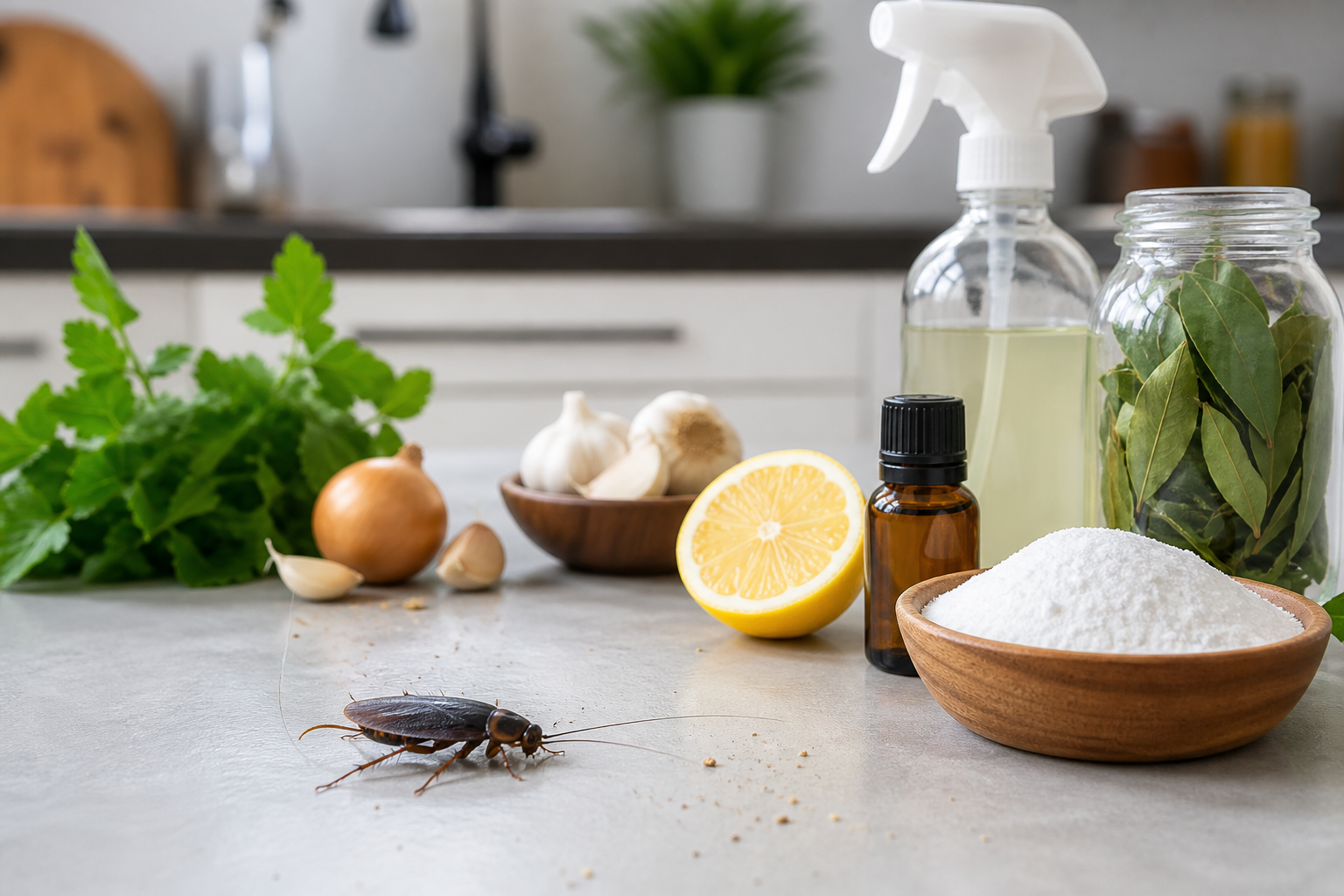
Searching for cockroach control natural methods often turns up a mix of solid prevention tips, half-true hacks, and risky shortcuts. This guide cuts through the noise with a practical, low-tox plan you can start today. You’ll learn how to assess what you’re up against, remove what roaches need to survive, block their entry, and use simple, non-synthetic tools to reduce activity—while understanding when a larger infestation likely needs professional attention.
What “natural” really means (and its limits)
“Natural” can describe methods that rely on sanitation, habitat changes, physical removal, and low-tox minerals or baits. These strategies aim to reduce exposure to synthetic insecticides. Natural approaches are strongest at prevention and early-stage control; they can significantly reduce pressure and keep populations from exploding. However, heavy, established infestations—especially with German cockroaches—can outpace DIY efforts. Use the framework below and evaluate progress on a defined schedule so you know when to escalate.
- Strengths: prevention, risk reduction, long-term maintenance, spot knockdowns.
- Limits: slower results, requires consistency, less effective for large, hidden colonies.
- Principle: remove food, water, and shelter first; then combine targeted tools.
Assess before you act: signs, hotspots, and scope
Start with a quick survey so you apply effort where it matters most. Roaches are nocturnal and moisture-seeking; kitchens and bathrooms top the list, followed by laundry areas, utility rooms, and cluttered storage.
- Common signs: pepper-like droppings, smear marks near moisture, shed skins, oothecae (egg cases), and a musty odour in severe cases.
- Hotspots: under sinks, behind refrigerators and stoves, inside cabinet hinges, along baseboards and wall gaps, around drains, and in cardboard stacks.
- Scope check: set 6–10 sticky traps (glue boards) in likely paths for 3–7 nights. Note where captures cluster; that’s where you’ll focus.
Starve and dry them out: food and water control
Roaches thrive when crumbs, grease, and moisture are available. Tighten your housekeeping in targeted ways that matter most to them.
- Food containment: move pantry goods to hard-sided, latching containers; bag pet food between feedings; avoid overnight dish piles.
- Crumb and grease removal: wipe stovetops, range hoods, and cabinet lips; pull appliances forward weekly to collect debris; degrease backsplash seams.
- Moisture control: fix drips, insulate sweating pipes, run fans during and after showers, and dry sink basins at night.
- Waste discipline: empty kitchen bins nightly; rinse recyclables; use tight-fitting lids.
These steps reduce how much bait or dust you need later and make every control tactic more effective.
Deny shelter and entry: sealing and decluttering
Roaches prefer tight harborage and easy highways along walls and gaps. Your goal is to remove those micro-habitats and close obvious entry points.
- Declutter: reduce cardboard (a favourite), paper bags, and stacked newspapers. Use plastic totes for storage.
- Seal: caulk gaps along baseboards, wall penetrations under sinks, and around pipes behind appliances. Install door sweeps and weatherstripping where light shows through.
- Organize cabinets: insert shelf liners you can remove and wash; keep items off cabinet corners to expose roach runways.
Physical removal for fast wins
Natural control starts with simple mechanical steps that immediately reduce numbers and disturb colonies.
- Vacuuming: use a crevice tool along baseboards, cabinet seams, appliance backs, and under sink rims. Immediately seal and discard the vacuum bag or empty the canister into a sealed bag outdoors.
- Soap-and-water knockdown: a spray bottle with warm water and a small amount of dish soap can immobilize and kill individual roaches on contact during night inspections.
- Steam (optional): low-moisture steam applied to cracks and crevices can kill on contact; avoid excessive moisture on wood and electronics.
Low-tox mineral tools: diatomaceous earth and boric acid
Two long-standing, non-synthetic options—used correctly—can play a supporting role. Always keep these away from children, pets, and food, and follow product labels.
- Diatomaceous earth (DE), food-grade: a fine powder that abrades the insect’s waxy layer, leading to desiccation. Apply in ultra-thin, barely visible layers with a hand duster into cracks, behind outlets (power off), under appliances, and along voids—not on open countertops or where it will be disturbed. Avoid inhalation; wear a dust mask during application. Reapply after deep cleaning or when areas become damp.
- Boric acid powder: a mineral-based stomach poison for insects that also dehydrates. Use tiny pin-head dabs or light dustings in voids and behind kick plates—never in open food areas. Overapplication repels roaches; less is more. Do not use if pets or small children can access treated zones.
Both work slowly and best when sanitation and sealing are already in place.
Traps and targeted baits without spraying
While sprays are common, natural programs rely more on traps and enclosed placements.
- Sticky traps: keep several in place long term to intercept and monitor. Refresh every 2–4 weeks or when dusty.
- Enclosed bait placements: if you choose to use a roach bait, select enclosed stations rather than gels smeared on surfaces. Place near but not on food prep areas, focusing on corners, under sinks, and behind appliances. Keep stations out of reach of children and pets and follow the product label closely.
Note that baits are often considered part of an integrated approach rather than strictly “natural,” but enclosed formats minimize surface exposure compared to sprays.
Heat, cold, and isolation for infested items
When roaches hitchhike in boxes, small appliances, or décor, treat the item rather than the whole room.
- Heat: for heat-tolerant items, seal in a dark bag and place in a hot car or sunny spot where internal temperatures safely exceed normal room levels for several hours. Avoid warping plastics or damaging electronics.
- Freezing: for small, non-fragile items, seal in a bag and freeze for several days. Allow to return to room temperature while still bagged to prevent condensation.
- Isolation: store questionable items in sealed totes with a silica gel desiccant or leave bagged with a sticky trap inside to confirm activity before reintroduction.
Room-by-room natural checklist
- Kitchen: deep-clean grease, empty crumbs from toaster trays, degrease cabinet lips, store food in sealed containers, dry sinks nightly, dust DE or boric acid sparingly in inaccessible voids, and maintain 4–6 traps along walls.
- Bathroom: repair leaks, run a fan, wipe condensation, caulk around pipes, and place 1–2 traps behind the toilet and under the vanity.
- Laundry/utility: off-floor storage in plastic totes, seal wall penetrations, and keep the floor dry; one trap near the hot water tank area.
- Bedrooms/living areas: reduce cardboard, keep snacks out, manage pet food, and place traps along baseboards where furniture meets walls.
What to skip (and common myths)
- Bay leaves, coffee grounds, and cucumber peels: often cited but provide little to no meaningful control.
- Undirected “natural” sprays: even plant-based aerosols can scatter roaches, pushing them deeper into walls without solving the root causes.
- Heavy dusting of DE or boric acid: thick layers become roadblocks roaches avoid and create unnecessary exposure and mess. Use whisper-thin applications.
- Outdoor-only focus: most problem species breed indoors; sealing and indoor sanitation matter more than yard treatments for household control.
Monitoring timeline and measurable milestones
Set expectations and track progress so you know whether cockroach control natural methods are enough for your situation.
- Week 0–1: implement sanitation, sealing, and vacuuming; deploy traps. Expect immediate reductions in sightings at night as food/water sources drop.
- Week 2–3: add thin mineral dusts in voids and adjust trap placements based on captures. You should see fewer new droppings and declining trap counts.
- Week 4–6: evaluate. If you still capture multiple roaches per trap per night in kitchens or bathrooms, the infestation is likely established in hidden voids and may exceed DIY scope.
- Ongoing: keep two traps per hotspot as early-warning devices; refresh monthly.
Safety and good practices
- Keep powders and baits away from children, pets, and food. Apply into inaccessible voids only and follow all label directions.
- Avoid breathing dusts; wear a simple dust mask during application and ventilate afterwards.
- Never mix products or use homemade chemical concoctions.
- Clean methodically: apply dusts only after degreasing and drying targeted areas so they remain effective.
Natural repellents: what to expect
Some plant-derived oils are marketed as repellents. They may reduce activity in very localized spots for a short time but won’t eliminate a population. If you choose to use them, apply in areas where you want to discourage harborage (for example, the back corners of cabinets) and reapply as directed. Do not rely on scent-based approaches alone; pair them with sanitation, sealing, and trapping.
When to escalate beyond DIY
Even rigorous natural routines may struggle against fast-reproducing indoor species. If you observe daily daytime sightings, widespread droppings across multiple rooms, or high trap counts after 4–6 weeks, consider professional options. Operators can identify species, locate harbourages inside wall voids, and design an integrated treatment plan that aligns with your tolerance for products and your home’s layout.
Frequently asked questions
Are essential oils enough to get rid of roaches?
No. Oils and scent-based sprays can temporarily repel in small areas but won’t eliminate established colonies. Use them, if desired, as minor add-ons alongside sanitation, sealing, traps, and targeted void treatments.
Is boric acid considered natural, and is it safe?
Boric acid is a mineral-derived product commonly used for cockroach control. It should be treated with care: keep it away from children, pets, and food; use the smallest effective amounts in inaccessible voids; and follow all label directions. Overuse reduces effectiveness and increases risk.
What’s the difference between diatomaceous earth and boric acid?
Diatomaceous earth (food-grade) kills by desiccation when insects contact thin, dry films. Boric acid works as a stomach poison and desiccant. Both require dry conditions, precise placement, and patience, and are most effective after you remove food and water sources.
How long do natural methods take to show results?
You can see fewer sightings within the first week as food and water tighten. Measurable declines in trap counts typically appear over 2–3 weeks. If high activity persists beyond 4–6 weeks despite consistent effort, it’s time to consider professional help.
Can I vacuum up diatomaceous earth after I’m done?
Yes, but avoid breathing dust while cleaning. Lightly mist the area first to minimize airborne particles, vacuum with a HEPA-capable unit if available, and discard the bag or contents in a sealed trash bag outdoors.
Next steps
A practical next step
To discuss the options that apply to your situation, contact Bugman Plus and request the relevant details before moving forward.


