
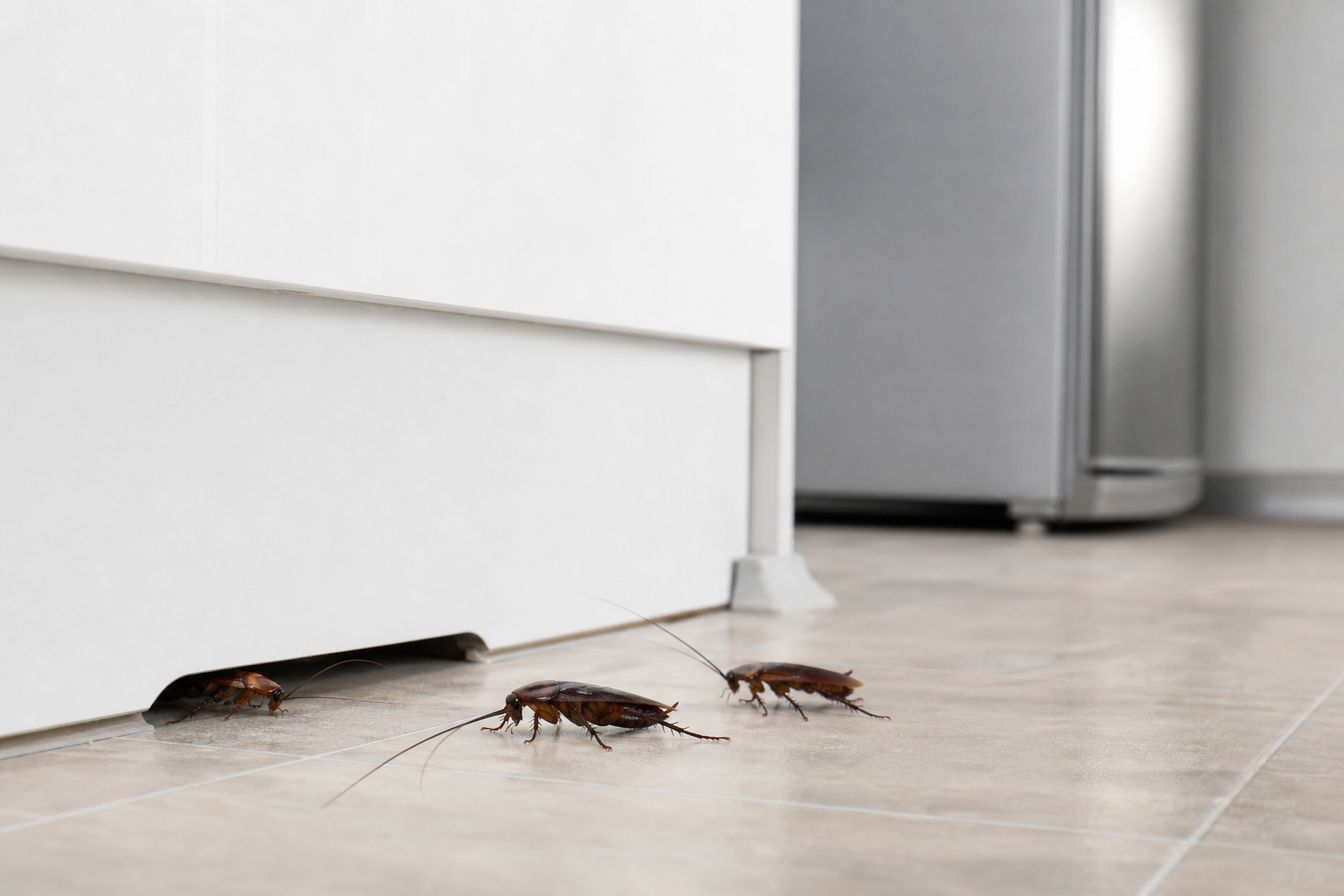
When cockroaches show up, the fastest path to relief is a clear plan that tackles both the insects and the conditions that help them thrive. This article explains how cockroach control and sanitation work together, what to prioritize first, and the exact steps to take in kitchens, bathrooms, and the rest of your home. Use the checklists below to remove food, water, and shelter sources while improving monitoring and treatment decisions.
How cockroaches get and stay established
Understanding why roaches choose a home makes every action more targeted. Cockroaches look for dependable resources and protected spaces. They often spread through everyday activities and stay hidden until populations grow.
- Entry paths: grocery boxes, used appliances and furniture, deliveries, luggage, gaps around doors and pipes, shared walls and utility lines.
- Core resources: crumbs, grease films, pet food, residues under appliances, accessible garbage, standing water, and cluttered voids.
- Harbourage: warm, tight spaces such as behind refrigerators, under sinks, inside cabinet voids, cracks in kick plates, and cluttered storage.
- Activity timing: most species are nocturnal; daytime sightings can indicate larger populations or disturbed harbourage.
Because cockroaches exploit small, consistent lapses, combining sanitation upgrades with targeted control is more effective than either approach alone.
Sanitation core principles that power control results
Sanitation is not just cleaning; it is the consistent removal of what sustains roaches. These principles make any trap, bait, or treatment more effective and reduce rebound risk.
- Starve the population: keep all food in sealed containers, wipe films and crumbs nightly, and empty small waste bins before bed.
- Remove water access: fix drips, dry sink basins and shower ledges, and avoid leaving pet bowls filled overnight.
- Limit harbourage: reduce cardboard, tidy stacks, and seal cracks and gaps that provide tight, dark resting spaces.
- Control movement: close utility penetrations, add door sweeps, and maintain weatherstripping to limit new entries.
- Standardize routines: create brief evening and weekly checklists so improvements don’t fade after a single deep clean.
Inspection and monitoring that guide smarter actions
Inspection focuses effort where it counts. Monitoring shows whether your actions are working and where to adjust.
- Use light and mirrors: a flashlight and a small mirror help you check under and behind appliances, sink bases, and kick plates.
- Look for signs: pepper-like droppings, shed skins, small egg cases (oothecae), and smears in corners and along edges.
- Trap placement: set glue monitors along wall edges near heat and moisture sources; label locations and dates for comparison.
- Map hotspots: note repeated trap catches or sightings to prioritize bait placements and sealing work.
- Track changes weekly: fewer trap catches and less spotting typically indicate progress; flat or rising numbers mean to intensify actions.
Room-by-room checklist
Use these focused actions to align cockroach control and sanitation by space. Complete the highest-impact steps first, then move through the rest systematically.
Kitchen
- Countertops: clear and wipe nightly; pay attention to appliance edges and backsplash seams.
- Appliances: pull stove and fridge forward if safe to do so; vacuum and wipe sides, backs, and floors beneath. Clean drip trays and gaskets.
- Cabinets and drawers: empty, vacuum debris from seams, and wipe shelves. Store dry goods in hard, sealed containers.
- Sink and plumbing: dry basins at night; repair drips; foam or caulk pipe gaps inside the cabinet and where lines enter walls.
- Kick plates and toe-kicks: remove if possible to clean and inspect; seal cracks where wood meets flooring.
- Garbage and recycling: use tight-fitting lids; line bins; rinse containers; take out nightly during active issues.
- Floor edges: vacuum along baseboards and under stationary items; mop to remove sticky residues that attract feeding.
- Bait and traps: place monitors along wall junctions; apply baits near but not on cleaned harbourage zones following product labels.
Bathroom
- Moisture control: run ventilation fans during and after showers; squeegee or wipe wet ledges.
- Vanity and sink base: clean hair and residue; seal gaps around pipes and the faucet base; repair slow leaks.
- Toilet base and tank: wipe condensation; seal the base perimeter if gaps allow cockroach access.
- Storage: reduce cardboard; keep items in plastic bins with lids; remove expired products.
- Monitoring: place a glue trap behind the toilet or vanity where it stays dry and undisturbed.
Laundry and utility areas
- Appliance surroundings: clean lint and soap residues; check behind and beneath machines.
- Floor drains and sumps: keep covers in place; maintain water traps to prevent odour and pest issues.
- Utility penetrations: seal gaps where plumbing, gas, and electrical lines enter walls.
- Storage: elevate items off the floor; reduce cardboard; avoid long-term clutter piles.
Living spaces and bedrooms
- Food rules: confine eating to the kitchen during active control; if snacks occur, clear and vacuum immediately.
- Furniture: inspect and vacuum under couches and along seams; reduce magazines and paper stacks that create tight harborage.
- Closets: store rarely used items in lidded bins; avoid loose shopping bags on floors.
- Electronics: check around warm power supplies and cable nests; keep dust down with careful vacuuming.
Entry points and exterior touchpoints
- Doors: add or repair door sweeps; ensure weatherstripping makes full contact.
- Perimeter: seal gaps at utility penetrations; repair window screens; tidy stacked materials against walls.
- Deliveries and secondhand items: inspect boxes and furniture outdoors or in a garage before bringing inside.
Treatment basics and safety alignment
Non-chemical and chemical tactics can be effective when used carefully and in concert with sanitation. Always read and follow product labels and safety directions. If you are unsure what to use in your situation, consider consulting a licensed pest management professional in your area.
- Mechanical removal: vacuum visible roaches and harbourage debris using a crevice tool; dispose of vacuum contents in a sealed bag outdoors.
- Gel baits: place small, fresh dabs near edges, corners, and harbourage-adjacent areas—never directly on recently cleaned surfaces. Replace as directed on the label.
- Insect growth regulators (IGRs): use according to label directions to disrupt life cycles; they are complements, not stand-alone fixes.
- Residual sprays and dusts: apply only where labels allow and out of reach of children and pets. Favor crack-and-crevice applications near mapped hotspots; avoid contaminating bait placements.
- Trap strategy: keep glue monitors in consistent locations; compare weekly catch counts to evaluate progress and reposition as needed.
- Compatibility: avoid spraying over areas where you placed baits; residues can repel roaches from feeding.
Important safety notes: store products in original containers, away from food and out of reach of children and pets. Do not mix products or exceed label rates. If anyone in the home has sensitivities, discuss options with a qualified professional.
Priorities for the first 14 days
Front-load high-impact actions and then shift to maintenance once trap counts and sightings decline.
- Day 1–2: deep clean kitchen and bathroom hot spots; empty and wipe cabinets; pull and clean around major appliances.
- Day 1–3: seal plumbing gaps under sinks and around utility lines; add door sweeps and repair weatherstripping.
- Day 2–4: deploy glue monitors; map and label locations; log baseline counts.
- Day 3–5: place gel baits near mapped harbourage zones; ensure no recent spray residues nearby.
- Day 6–10: sustain nightly wipe-downs; empty small trash bins; keep pet food up overnight; refresh baits per label.
- Day 11–14: review monitor counts; add crack-and-crevice treatments if needed and allowed by label; continue sealing and clutter reduction.
Maintenance habits that keep roaches out
After numbers drop, consistent, quick routines prevent re-establishment and make any future issue easier to resolve.
- Nightly five-minute reset: wipe counters, sweep or vacuum floor edges, empty small bins, dry sinks, and store pet dishes.
- Weekly fifteen-minute focus: clean appliance sides and fronts, check under sink bases, replace any stale baits, and inspect traps.
- Monthly inspection: move small appliances, vacuum kick plates, and reassess sealing needs around plumbing and utilities.
- Receiving protocol: inspect deliveries and secondhand items before entry; discard exterior cardboard promptly.
Troubleshooting and when to escalate
If progress stalls or sightings increase, target the likely bottleneck before changing everything at once.
- Stubborn kitchen hotspots: verify that grease films and crumbs are truly gone behind and beside appliances; refresh baits.
- Ongoing bathroom captures: recheck for moisture sources and unsealed pipe gaps; improve ventilation and drying routines.
- Recurring entries: re-inspect door sweeps, weatherstripping, and utility penetrations; confirm neighbouring shared-wall pathways if applicable.
- Trap aversion or no feeding: avoid recent broad spray applications near baits; rotate bait placements and formulations per label availability.
- Multiple rooms involved: concentrate on the heaviest source room first while maintaining sanitation elsewhere to prevent spread.
FAQ
What’s the most important first step for cockroach control and sanitation?
Confirm where activity is highest and remove the easy resources there first. In practice, that means deep-cleaning kitchen and bathroom hotspots, sealing plumbing gaps, and placing monitors to validate where roaches travel. With food, water, and harbourage reduced, baits and other treatments work more predictably.
How long before I should see fewer roaches?
When sanitation upgrades and targeted baiting are done together, many homes notice fewer nighttime sightings within one to two weeks. Progress depends on how thoroughly resources are removed, how well hotspots are treated, and whether new roaches can still enter. Use weekly trap counts to measure change.
Are natural or DIY methods enough on their own?
Mechanical steps like vacuuming, sealing gaps, and strict sanitation substantially reduce pressure and sometimes resolve lighter issues. For established infestations, combining these with appropriately used control products tends to be more reliable. Always follow product labels, and consult a qualified professional if you are unsure what is suitable for your situation.
A practical next step
To discuss the options that apply to your situation, contact Bugman Plus and request the relevant details before moving forward.


