
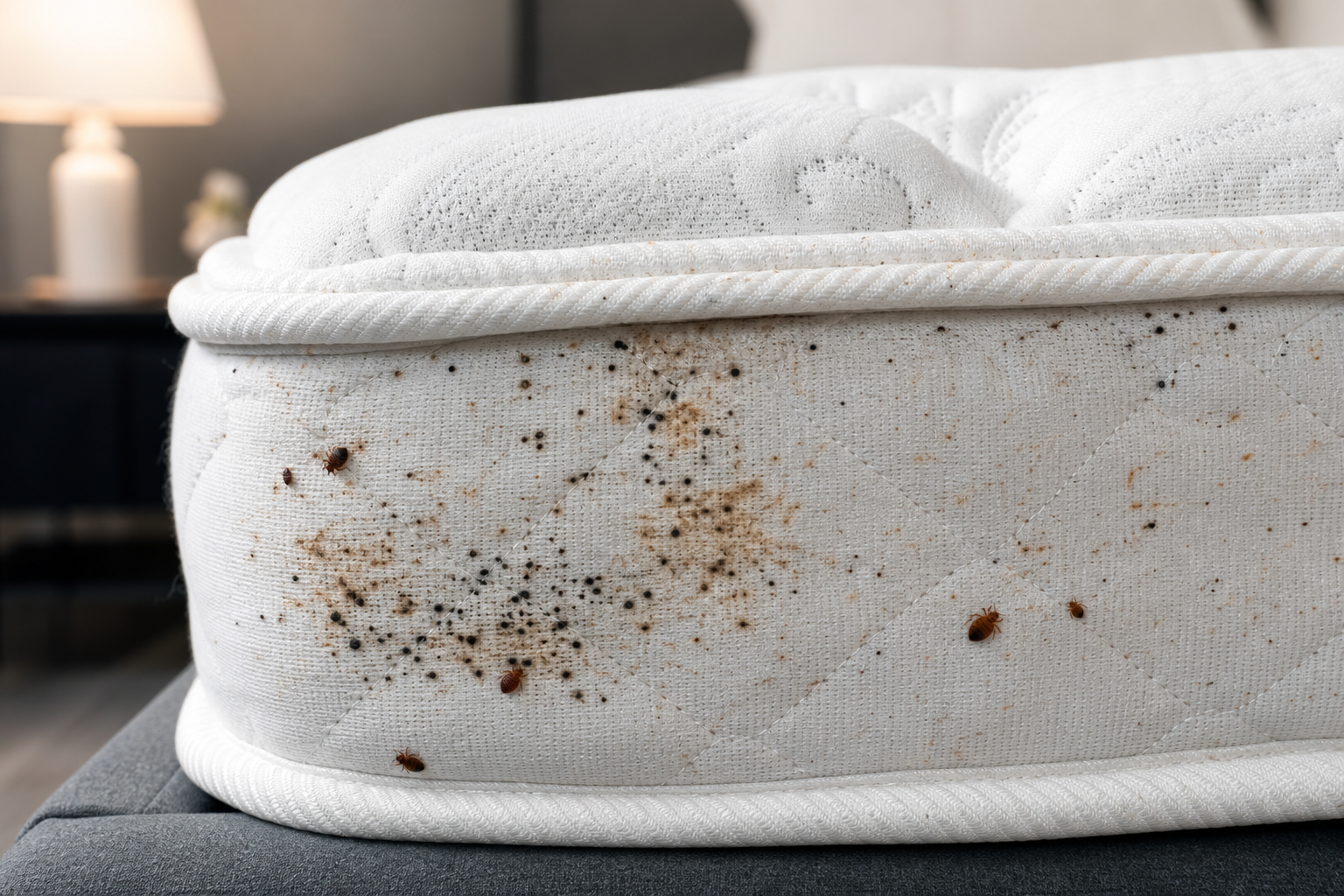
If you’re searching for "bed bug signs mattress", you’re likely noticing something on your bed and want quick, reliable answers. This article explains the most trustworthy signs to look for on a mattress and box spring, how to check fast without spreading anything, how to tell bed bugs apart from common lookalikes, and practical next steps to take.
What mattress signs matter most
Bed bugs leave several distinct clues directly on mattresses, box springs, and nearby bed parts. The most reliable evidence typically includes:
- Tiny dark fecal spots – Pinpoint specks that look like black marker dots. On fabric, these often soak in and may smear dark brown if lightly moistened. You’ll often see clusters along seams, piping, and the underside of a box spring.
- Rusty or red smears – Small blood stains on sheets, pillowcases, or the mattress surface. These can occur when a recently fed bug is crushed during sleep.
- Cast skins (exuviae) – Paper-thin, translucent tan shells that look like empty bug outlines. These accumulate where bed bugs hide and molt.
- Eggs and eggshells – Very small, pearly white, and sticky when first laid. Eggs are typically tucked into seams, fabric folds, labels, and screw holes.
- Live bed bugs – Flat, oval insects. Young nymphs are pale and very small; adults are about the size of an apple seed and brown to reddish-brown after feeding. On mattresses, they prefer tight gaps and protected edges.
- Musty or sweet odour – Some people notice a distinct smell around heavy activity. Odour alone is not proof, but combined with the signs above it adds weight.
Any one sign can be suggestive, but clusters of signs (for example, fecal spots plus cast skins) are stronger evidence than a single spot or stain.
Where to look on the bed
Bed bugs prefer tight, undisturbed spaces close to where you sleep. When inspecting, focus on these areas in order:
- Mattress seams and piping – Run a fingernail or credit card edge along the seam. Check the tape edge, welting, and any fabric folds.
- Labels, handles, and air vents – Lift and look behind sewn-on labels and under handles where fabric layers meet.
- Tufts and buttoned areas – Gently pull back fabric around tufts; bugs and eggs can anchor here.
- Box spring underside – If there’s a dust cover (thin black fabric), inspect the staples, edges, and any tears or holes. Look along the wooden frame inside the box spring corners if accessible.
- Bed frame joints – Pay extra attention to screw holes, slat ends, bolt heads, and any cracks where two pieces meet.
- Headboard and footboard – Check the back, the wall-facing side, mounting brackets, and decorative cracks or grooves.
- Nearby items within 1–2 metres – Nightstands, the underside of drawers, lamp bases, fabric bed skirts, and the edges of carpets or rugs close to the bed.
The closer you get to the head and sides of the mattress, the more likely you are to find early signs. Start with the mattress and box spring before moving outward.
A 10-minute mattress inspection
You do not need special tools for a quick, high-yield check. A bright flashlight and a bank card (or dull butter knife) to lift seams are enough. Work methodically to avoid missing hidden clusters.
- Strip bedding – Remove sheets, pillowcases, and the mattress protector. Place them gently into a plastic bag to launder later; avoid shaking fabrics to reduce the chance of dislodging small insects.
- Scan the top and sides – Use a flashlight at a low angle to highlight texture changes. Look for dark specks, pale eggs, or shed skins along seams and piping.
- Lift the seam – Run your card edge under the seam, pausing at corners and label areas. Watch for movement and check any clusters of dots.
- Check labels and handles – Lift and peer under brand labels and stitched handles; these create ideal pocket-like harbours.
- Stand the mattress carefully – If safe to do so, tip the mattress onto its side to inspect the bottom seam and surface. Keep it close to the frame to avoid scraping walls and spreading dust.
- Inspect the box spring – Focus on the underside edges, staple lines, and any tears in the dust cover. If a corner is open, look for spots or cast skins on the internal wood.
- Check the frame and headboard – Examine joints, screw holes, and the back of the headboard (especially where it meets the wall or mattress).
- Note anything suspicious – Take clear photos of clusters or items you’re unsure about. Photos help you compare signs later and can be shared with a qualified professional for identification.
In many cases, this 10-minute routine is enough to decide whether the evidence is mounting or inconclusive.
How to tell bed bug signs from lookalikes
Because beds collect lint, dust, and everyday wear marks, it’s easy to mistake benign debris for infestation. Here are common mix-ups and how to separate them from true bed bug evidence:
- Ink or makeup stains vs. fecal spots – Bed bug fecal spots are tiny, dark, and often bleed slightly into fabric. Random makeup smudges tend to be larger, irregular, and may appear on pillow edges or duvet covers rather than clustered along seams.
- Food crumbs or seeds vs. eggs – Crumbs are irregular, not anchored, and brush away easily. Eggs are smooth, tiny, light-coloured, and often stuck in place along hidden fabric lines.
- Carpet beetle debris vs. cast skins – Carpet beetle larval skins are fuzzy or bristly and often found farther from the bed. Bed bug cast skins look like crisp, empty shells shaped like a small bug, usually close to seams.
- Flea dirt vs. fecal spots – Flea dirt (on pet bedding) appears as black specks that turn red when wetted due to digested blood, but fleas favour pet areas and upholstery. Bed bug fecal spotting clusters on mattress seams and bed frames near where people sleep.
When in doubt, location and pattern are key. Bed bug evidence tends to cluster in protected, tight areas on the mattress and frame, not randomly across open surfaces.
Signs beyond the mattress
If your mattress looks clean but you still suspect an issue, expand your search just beyond the bed:
- Sheets and pillowcases – Pinpoint blood smears or tiny black dots near the head and sides of the bed.
- Bed skirt and box spring cover – Check the hem lines and staple edges.
- Baseboards and wall junctures – Especially where the bed touches the wall, inspect gaps and screw holes from wall mounts or art.
- Nightstands – Look under the drawer, in the rear corners, and beneath the unit.
- Soft furnishings – Seams of nearby chairs, fabric storage bins, or curtains that contact the bed area.
Finding activity in these spots with a clean mattress can still indicate bed bugs are present close to the sleeping area.
Early signs vs. established activity
Understanding the pattern can help you gauge how urgent the situation might be:
- Early signs – A few isolated fecal dots on one mattress corner, a single shed skin, or one likely egg cluster. You may not see live bugs yet. Bites may be absent or intermittent.
- Established activity – Multiple clusters of fecal spots, several shed skins, repeated blood smears on sheets, or confirmed live bugs in more than one bed component (mattress, box spring, and frame).
Note that skin reactions vary widely. Some people never notice bites. Confirmation should rely on physical signs rather than skin symptoms alone.
What to do if you find suspicious signs
Act carefully to avoid spreading insects to other rooms or to friends and family. These steps focus on containment and documentation:
- Don’t move items unnecessarily – Keeping blankets, pillows, and clothing in the room limits the chance of hitchhiking.
- Bag soft items for laundering – Place sheets, pillowcases, and removable covers in sealed bags. Launder and dry on the warmest cycles the fabrics allow. Dispose of bags outdoors after loading the washer.
- Reduce clutter near the bed – Clear items from under and around the bed so that future inspections and any treatment are more effective.
- Vacuum carefully – Vacuum seams, the mattress surface, bed frame cracks, and floor edges. Immediately empty the vacuum contents into a sealed bag and remove it from the home.
- Document what you see – Photograph clusters of spots, eggs, or shed skins with a coin for scale. Good photos help confirm identification.
- Avoid improvised chemicals – Over-the-counter sprays, alcohol, or essential oils can scatter bugs and may pose risks if used incorrectly. Always follow product labels exactly and keep people and pets safe.
If you choose to seek professional assistance, share your notes, photos, and the specific locations where you found signs. This makes any inspection or service more targeted.
How often to check your mattress
Perform the 10-minute inspection when you first notice suspicious marks, after returning from travel, and again 7–10 days later if you’re still unsure. Regular, brief checks focus on seams, labels, and the box spring underside; you don’t need to disassemble furniture each time.
Prevention tips that don’t spread bugs
Simple habits reduce the chance of bringing bed bugs home or moving them around the house:
- Be luggage-aware – After travel, inspect luggage seams and keep suitcases off the bed. Store them away from sleeping areas when not in use.
- Quarantine secondhand items – Inspect and, when possible, treat used furniture or textiles before bringing them inside.
- Use light-coloured bedding – Fecal spots and blood smears are easier to spot early on pale fabrics.
- Minimize bed-to-wall contact – Small gaps make it harder for bugs to access the bed from baseboards or wall joints.
FAQs
What do early bed bug signs look like on a mattress?
Early signs often include a few tiny dark fecal specks along seams or near a label, a single shed skin, or a small, pearly egg cluster tucked in a fabric fold. You may not see live bugs at first, and there may be no bite reactions. Clusters of multiple signs are stronger evidence than any single mark.
Can I have bed bugs without getting bites?
Yes. Not everyone reacts to bed bug bites, and reactions can be delayed. That’s why visual confirmation on the mattress or nearby bed components is more reliable than relying on skin symptoms alone.
Do bed bugs only live in mattresses?
No. Mattresses and box springs provide ideal hiding spots, but bed bugs also shelter in bed frames, headboards, baseboards, nightstands, and other tight gaps within a couple of metres of where people sleep.
Should I throw away my mattress if I see signs?
Discarding a mattress is not automatically necessary and can spread bugs during removal. Focus first on confirming the evidence and containing items. If disposal is chosen later, securely wrap and label the mattress according to local waste guidelines.
Next steps
A practical next step
To discuss the options that apply to your situation, contact Bugman Plus and request the relevant details before moving forward.


