
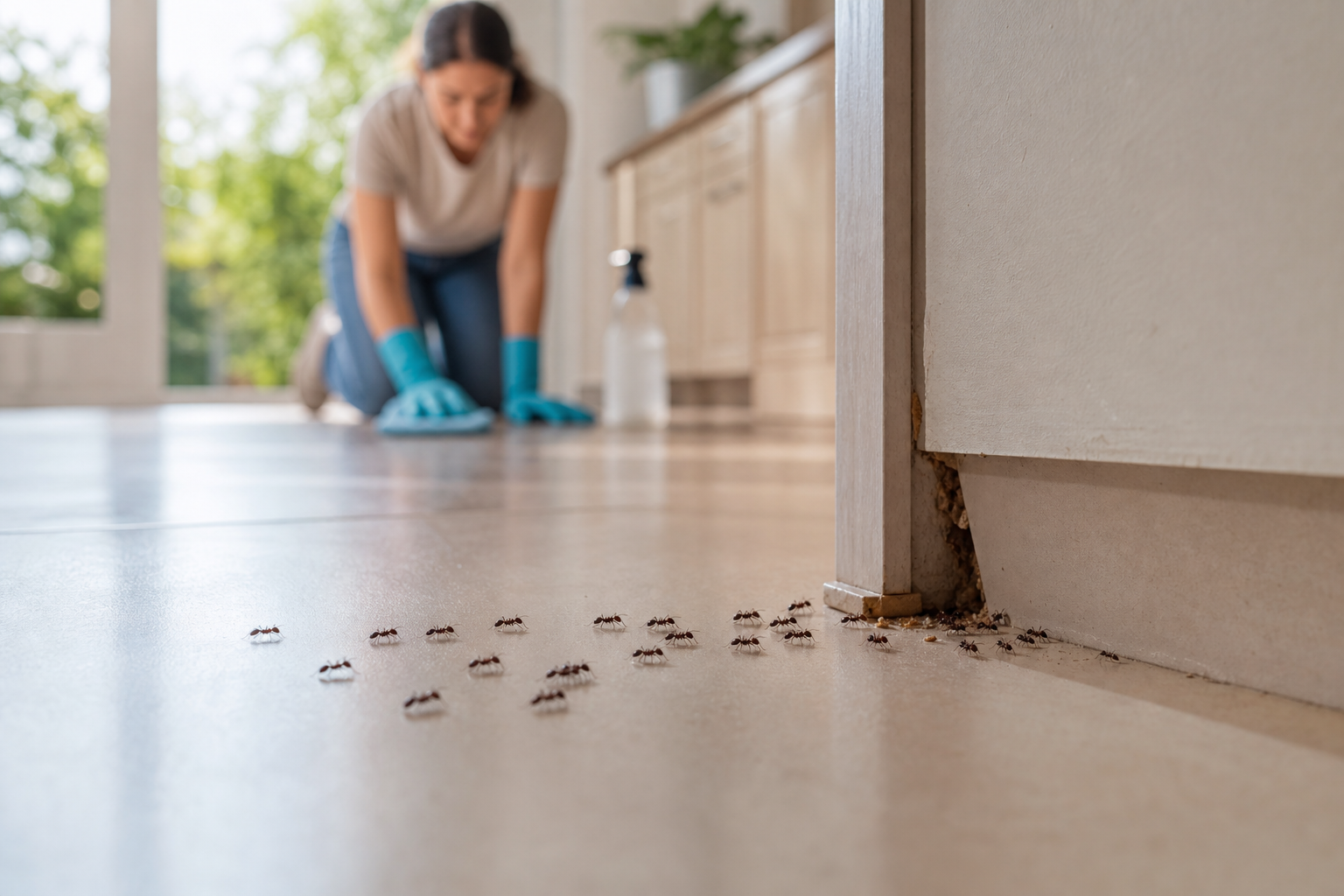
What ant extermination prevention means and why it matters
Definition in one sentence
Ant extermination prevention is a focused set of actions—sanitation, exclusion, monitoring, and selective baiting—aimed at stopping worker ants from finding food, shelter, and nest sites so colonies do not establish inside a home.
Why prevention is the priority for homeowners
Preventing ants lowers the chance of structural damage, reduces cleaning and replacement costs, and often avoids repeated pesticide applications. Because ants are social insects that forage and feed colony members, interrupting food and access pathways early usually produces longer lasting results than killing only the visible workers.
How ant colony behaviour makes prevention effective
Foraging, food trails, and colony dynamics
Worker ants use pheromone trails to mark efficient routes from a food source back to the nest, so a single discovery can bring many foragers. Because workers transport food to feed larvae and the queen, treating only visible ants without addressing the nest rarely eliminates the colony. Government and extension guidance explain why controlling attractants and using baits that workers carry back to the nest are effective strategies, rather than relying on surface sprays alone (ants.html).
Why baits often work better than spraying visible ants
Baits rely on worker ants to collect a slow-acting active ingredient and transfer it to the nest, reaching members you cannot see. Sprays can remove the very workers that would take bait to the nest and can break pheromone trails, which reduces bait effectiveness. Integrated approaches that prioritise baiting and exclusion are recommended by pest management experts (Penn State Extension).
Common ant species in Canadian homes and species-specific prevention
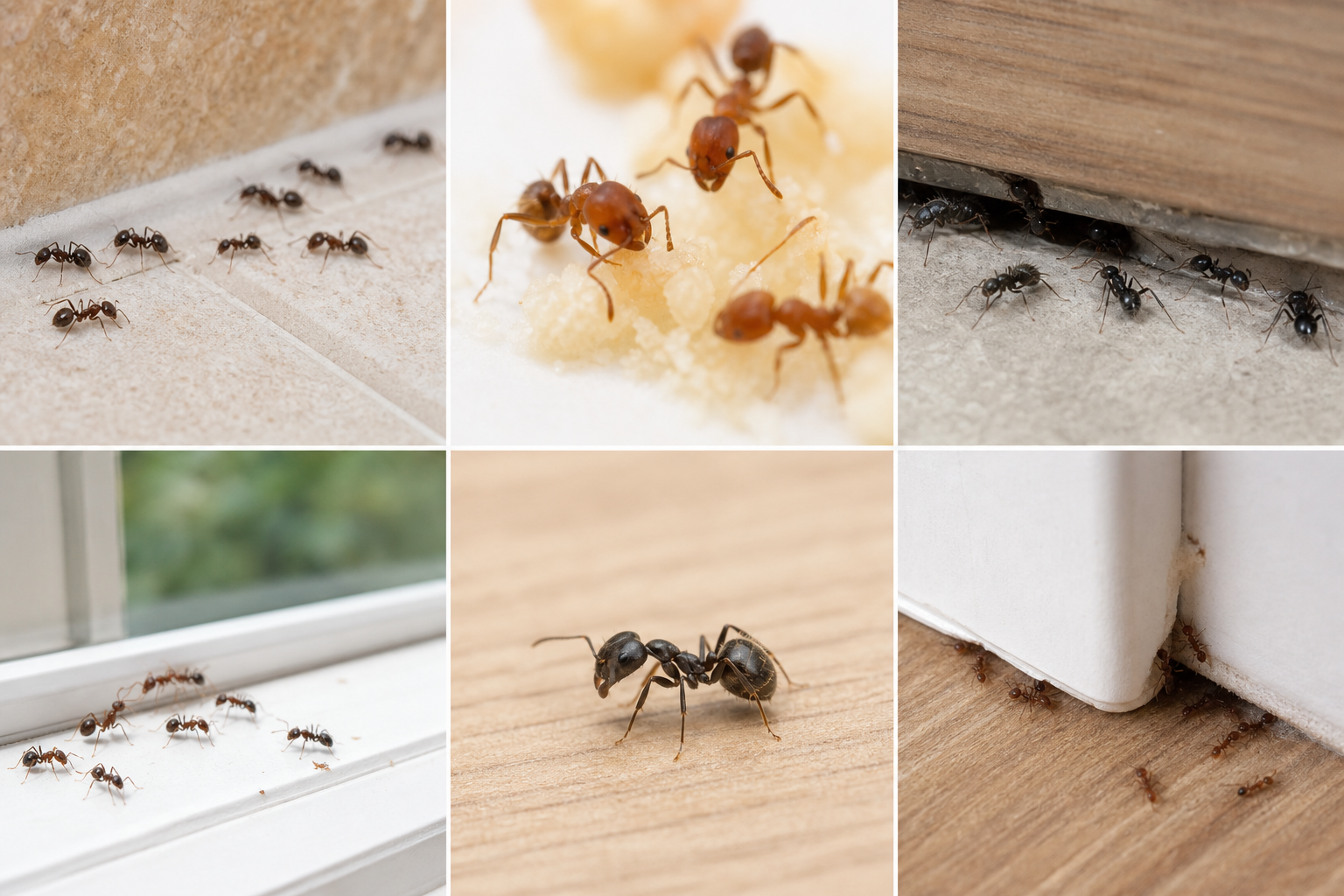
Carpenter ants: moisture and wood repair matter
Carpenter ants are larger, typically 6 to 12 mm long, and excavate wood to build galleries. They do not eat wood but they can cause structural damage by tunnelling in damp or rotting timber. Prevention focuses on removing moisture, repairing or replacing damaged wood, and keeping exterior woodwork painted and sealed. For species-specific tactics see the Province of British Columbia guidance on carpenter ants (Managing Carpenter Ant Pests - Province of British Columbia).
Small nuisance ants and indoor food hygiene
Species such as the little black ant, odorous house ant, thief ant, and pharaoh ant are attracted to accessible food and crumbs. For these species strict food storage, prompt cleanup of spills, and sealing entry points so workers cannot form indoor trails are the most effective household measures (ants.html).
When a species needs professional tactics
Some behaviours, such as pharaoh ants nesting in wall voids or carpenter ants in structural wood, require inspection and targeted treatments that homeowners should not attempt alone. A trained technician can identify the species, locate nests, and recommend exclusion and treatment options appropriate for that species.
A practical, evidence-backed prevention checklist for Oshawa homes
Immediate actions you can do today
Start with these quick steps to remove attractants and visible trails:
- Clean counters and sweep floors daily; wipe up spills immediately.
- Store food in airtight containers, including pet food and birdseed.
- Empty indoor trash regularly and keep lids sealed.
- Remove visible ant trails with soapy water to disrupt pheromone signals.
- Place ant baits near trails and avoid spraying foragers when you plan to use baits (ants.html).
Home maintenance and exclusion
Durable prevention depends on sealing and repairing the building envelope. Key tasks include:
- Seal gaps around doors, windows, and where utilities enter the home; fill cracks in foundations and gaps in siding.
- Repair holes in screens and weatherstripping on doors and windows.
- Fix leaky pipes, remove standing water, and correct roof or gutter issues that create damp wood, which is especially important for preventing carpenter ants (Managing Carpenter Ant Pests - Province of British Columbia).
- Reduce wood-to-ground contact for decks and trim to limit nesting opportunities.
For step-by-step sealing techniques and photos refer to the Bugman Plus post on entry point sealing: ant control entry point sealing.
Yard and perimeter tasks
- Keep mulch and landscaping away from the foundation and maintain a cleared perimeter.
- Store firewood and lumber away from the house and off the ground.
- Trim tree branches and shrubs so they do not touch the building and provide ant bridges.
When to recheck and seasonal reminders
Reinspect common access points seasonally and after heavy rains. Ant activity varies with temperature and moisture, so a quarterly quick check of entry points, food storage, and perimeter conditions is a practical routine.
Baiting versus spraying: what works, and safety rules to follow
How ant baits work
Ant baits contain an attractive food matrix and an active ingredient that acts slowly enough for workers to return it to the nest. Baits are chosen to match the food preference of the species observed—sugary baits for sugar-preferring ants and protein or fat baits for others—and are most effective when placed along established trails and left undisturbed until activity declines (ants.html).
Why not to spray while baiting
Sprays can kill workers that would otherwise transport bait and can eliminate pheromone trails that guide bait-carrying ants. For this reason, pest management experts recommend prioritising baiting and exclusion and avoiding simultaneous spraying that interferes with bait uptake (Penn State Extension).
Pet and child safety when using baits
- Place baits in locations inaccessible to children and pets, or use tamper-resistant bait stations.
- Follow product labels; labels provide protective measures and first-aid steps.
- If you have specific safety concerns, choose non-chemical exclusion and monitoring or consult a licensed technician for safe placement.
When prevention is enough and when to call a professional

Decision checklist for calling a pro
Try prevention first for small, short-lived sightings after improving sanitation and sealing obvious gaps. Contact a professional if any of these apply:
- Repeated indoor sightings despite good sanitation and exclusion.
- Evidence of nesting inside walls, structural wood, or damp timbers consistent with carpenter ants (Managing Carpenter Ant Pests - Province of British Columbia).
- Large, persistent trails that suggest a sizeable colony, or pharaoh ants nesting in inaccessible voids.
- You need assistance identifying species or locating nests.
What to expect from a Bugman Plus inspection and warranty
Bugman Plus provides local ant control services in Oshawa and offers interior treatment programs backed by a 3-month warranty. An inspection identifies the species, likely entry points, and whether exclusion, baiting, or targeted treatment is required. A technician will explain the recommended approach and the warranty terms; to learn more about services visit Bugman Plus.
Common objections and realistic expectations about prevention
Why repeat sightings can happen after treatment
After initial treatment or exclusion, workers from a nearby nest may still forage for a short time as trails change or new scouts discover food. Prevention reduces this cycle, but monitoring and follow-up are often necessary before activity stops completely. Integrated approaches that combine sanitation, exclusion, and baiting generally reduce recurrence more reliably than single tactics (Penn State Extension).
Balancing safety with effectiveness
Homeowners often want a quick visible result, which makes sprays attractive. However, sprays can undermine bait programs and may not reach hidden nests. Balancing safety and effectiveness means selecting low-exposure baiting where possible, sealing access points, and using professional help when nests are inside structural voids.
Next steps for homeowners and a local option in Oshawa
Printable action list
- Clean and store food securely, remove spills, and empty trash.
- Place ant baits along visible trails and avoid spraying near those baits.
- Seal gaps around doors, windows, pipes, and siding; repair leaks and damp wood.
- Move woodpiles away from the house and trim vegetation touching the structure.
- Recheck in two weeks and repeat baiting if worker activity continues; call a professional if activity persists or you suspect carpenter ants.
Contact Bugman Plus for a quote or inspection
If prevention steps do not stop ant activity, or if you suspect carpenter ants or nests inside walls, consider a professional inspection. Bugman Plus serves Oshawa and offers ant control as part of its core services, including interior treatment programs covered by a 3-month warranty. Begin with a site assessment to identify the right combination of exclusion, baiting, or targeted treatment for your home: Bugman Plus.
Frequently asked questions
Can I stop ants with cleaning and sanitation alone?
Often yes for small nuisance species. Good sanitation removes attractants and can break trails. If ants persist after strict sanitation and sealing, add baiting or consult a professional for species-specific action.
Why should I avoid spraying visible ants when using ant baits?
Sprays can kill or disrupt the workers that would carry bait to the nest and can eliminate pheromone trails that lead bait-collecting ants to the source, reducing bait effectiveness. Use baits and wait for results before using sprays.
How can I tell if I have carpenter ants and not nuisance ants?
Carpenter ants are larger and excavate wood. Look for sawdust-like frass, rustling in walls at night, or large workers around 6 to 12 mm long. When in doubt, a professional inspection will identify the species and nesting sites (Managing Carpenter Ant Pests - Province of British Columbia).
How long should I try prevention before calling an exterminator?
Give a prevention and baiting plan two to four weeks to show progress for small nuisance infestations. Call a professional sooner if activity continues, increases, or you find indoor nests or damage.
Are ant baits safe for homes with pets and children?
Many baits are designed for household use but should be placed in tamper-resistant stations or out of reach. Always read and follow label directions. If you have safety concerns, consult a licensed technician for safe placement or alternative strategies.
External resources: Canada.ca ant advice, Penn State Extension on IPM, BC government carpenter ant guidance.
Talk with Bugman Plus
Contact Bugman Plus to ask about the next step and confirm which options fit your needs.


