
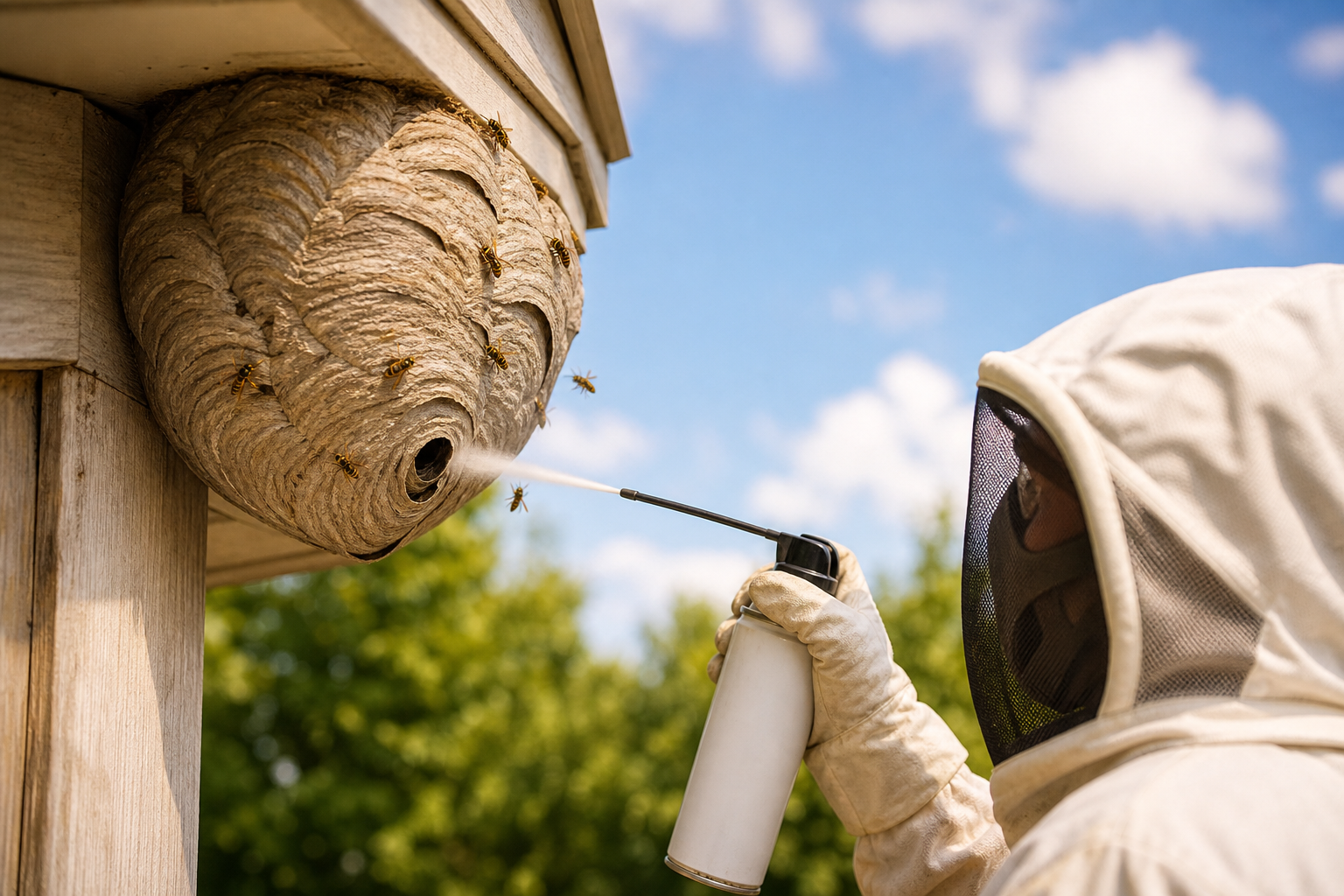
Quick action: what to do now if you see aggressive wasps
If you spot aggressive wasps or a nest near an entryway, follow this mobile-friendly checklist to reduce immediate risk. 1) Keep people and pets away from the area and close nearby doors or windows. 2) Move children and pets indoors and away from the garden. 3) Do not swat at wasps or try to spray them while standing close. 4) Make a note of the nest location and size from a safe distance, and take a photo if you can without getting closer. 5) Calmly mark the area so others know to avoid it until a safe plan is in place. If anyone shows signs of a severe allergic reaction, call emergency services immediately.
These steps reflect Canada Health guidance on looking for wasp activity early and taking care when treating nests, and the general pesticide safety advice on preparing before you spray, which help reduce harm to people and the environment (Wasps - Canada.ca) and (Use pesticides safely - Canada.ca).
1. Inspect early in the season and identify nest types
Start checking your yard in early summer for small paper nests or wasp activity, because nests are easiest and least risky to manage when they are young. Health Canada recommends early inspections of yards and home surroundings to spot paper wasps and other common nests before they grow large (Wasps - Canada.ca).
Quick identification tips:
- Paper wasp nests are umbrella-shaped and exposed under eaves or porch ceilings. They are usually grey or brown and open at the bottom.
- Hornet nests are often larger and enclosed, usually found in trees or wall cavities. These can host hundreds of insects by late summer.
- Mud dauber nests are small, tube-like mud cells and are typically less aggressive, but still check them from a distance.
Photograph nests from a safe distance. The nest type, placement, and size will help you decide whether a low-risk DIY check is reasonable or if you should call a professional.
2. Only approach nests at night and use the right PPE
Wasps are less active after dark. Extension guidance and practical sources recommend that any close inspection or treatment be done after sunset when most insects are in the nest, because movement and activity are lower and the risk of provoking a swarm is reduced (Controlling Wasps, Bees and Hornets Around Your Home - Extension).
For any necessary close approach wear proper protective equipment. Recommended clothing includes:
- Long sleeves and long pants made of thick fabric that wasps cannot sting through easily.
- Closed shoes and socks. Tuck pant legs into socks to reduce gaps.
- Gloves and eye protection to stop stings to the face and hands.
- A hat with a stiff brim and a veil if you have one, or at minimum protective eyewear and a scarf to cover the neck.
Move slowly and avoid sudden movements when near a nest. If you do not have the recommended PPE, do not attempt a close inspection.
3. Use insecticide sprays safely: timing, product choice, and weather
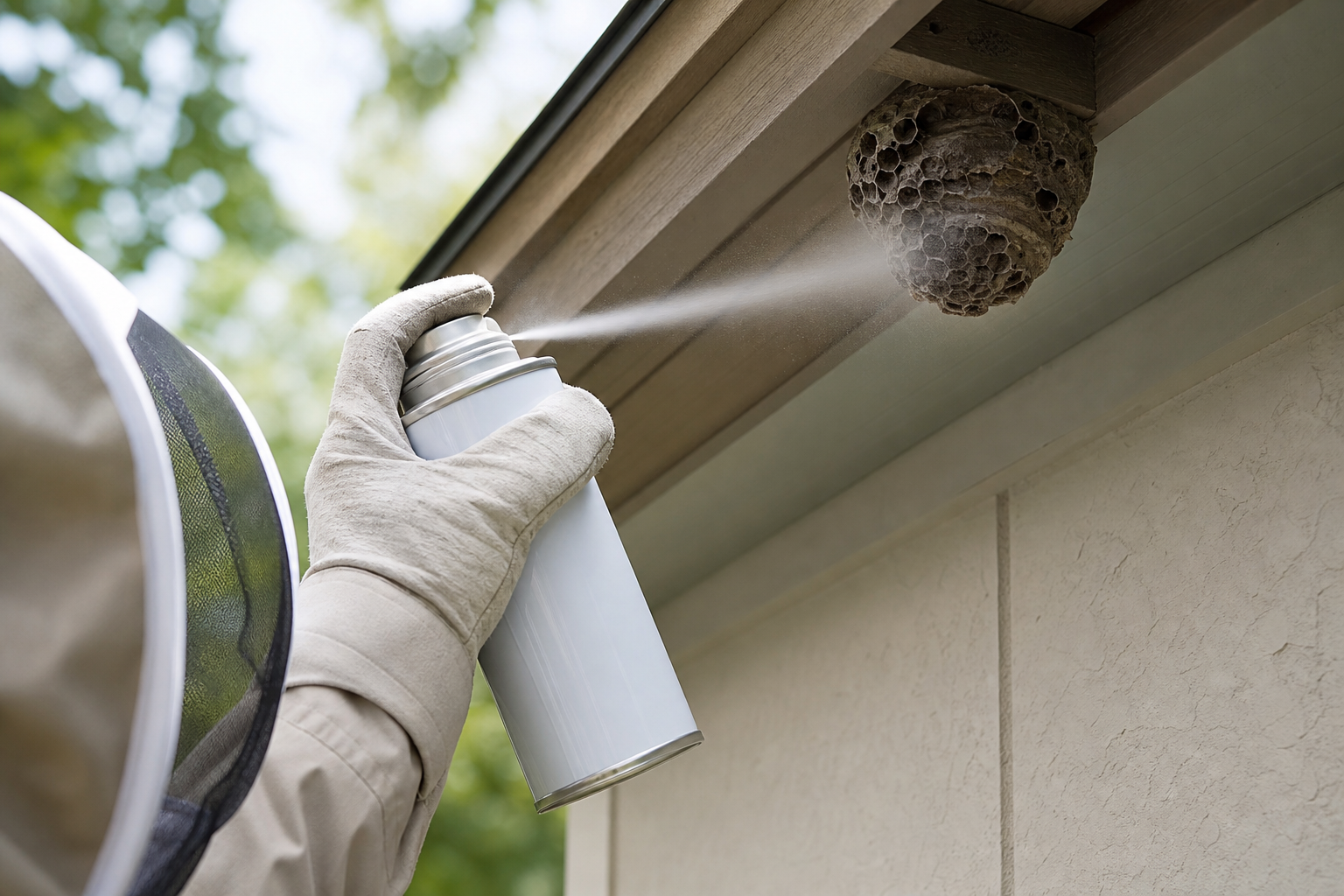
If you choose to treat a nest with a spray, do it after dark when wasps are less active and read product labels closely before use. Many retailers and extension bodies recommend a long-range wasp and hornet jet spray for outdoor nests so you can stand at a safe distance (How to Get Rid of Wasps | Lowe's). Canada’s pesticide guidance emphasises following label instructions for application, storage, and disposal and checking weather conditions before spraying to protect people and the environment (Use pesticides safely - Canada.ca).
Best-practice checklist when spraying:
- Treat after dark and plan an unobstructed escape route. Keep bystanders well away from the treatment site.
- Check the label for recommended distance, re-entry time, and any restrictions for pets or edible gardens.
- Do not spray in windy or rainy conditions, and avoid overspray onto plants, water features, or neighbouring properties.
- Dispose of any empty pesticide containers according to label instructions.
Remember that product labels are legal directions. If a product seems to require conditions you cannot meet safely, do not use it and consider professional help.
4. Protect family and pets before any treatment
Before you treat a nest, minimize exposure for children, seniors, and pets. Canada’s pesticide safety advice recommends planning around wind and people in the area and following label re-entry times to reduce health risks (Use pesticides safely - Canada.ca).
Quick protective actions:
- Bring pets and their water bowls indoors for several hours and follow the product re-entry time on the label.
- Cover or remove outdoor food, garbage, and baby seats before treatment.
- If treating near doors or vents, close them and seal gaps to reduce pesticide drift into living spaces.
- After treatment, ventilate indoor areas if pesticide was applied close to the house and follow the product's re-entry guidance.
Keep a phone handy and a basic first-aid kit nearby in case of accidental stings. If a household member is allergic to stings, consult their medical plan before any DIY treatment.
5. Prevent future nests by removing attractants and sealing access
Prevention reduces the need for risky treatments. Health Canada advises removing attractants and checking home surroundings to discourage wasps from building nests close to living spaces (Wasps - Canada.ca). Retail and home improvement sources add practical tips for nuisance reduction (How to Get Rid of Wasps | Lowe's).
Practical prevention actions:
- Keep garbage cans sealed and clean up fallen fruit, sweet spills, and pet food outdoors. Wasps are attracted to sweets and protein.
- Seal cracks, gaps, and openings under eaves, in soffits, and around siding where insects can start nests or enter wall voids.
- Maintain garden pruning to reduce sheltered spots and check seasonal structures such as sheds and playhouses before spring.
- Install screens on vents and keep compost and food waste away from play areas and patios.
Small investments in sealing and sanitation often prevent the need for pesticide use later in the season.
6. Common DIY mistakes to avoid
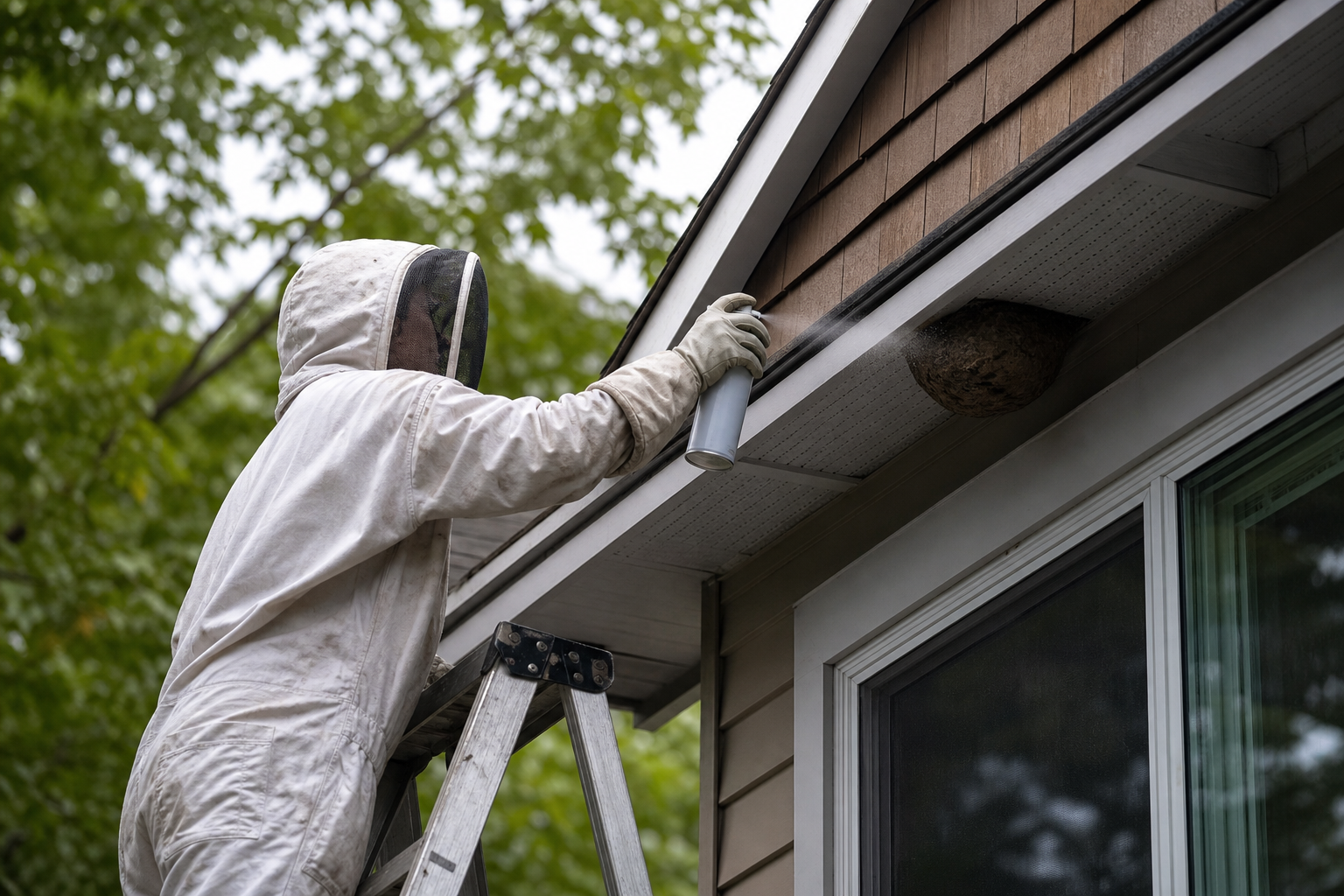
Attempting removal without the right timing, equipment, or approach can increase stings and may damage your property. Common mistakes include trying to knock a nest down by hand, using improvised sprays that are ineffective, and working on large nests close to doors or windows. Retail how-to guides warn that traps and home remedies are sometimes helpful for small nuisance wasps, but they are not a reliable method for removing an established nest (How to Get Rid of Wasps | Lowe's).
Other DIY pitfalls:
- Using short-range sprays when a long-range product or professional approach is needed.
- Ignoring re-entry times and exposing family or pets too soon after treatment.
- Working alone on high ladders without an observer or escape plan.
For more on avoidable errors and safer alternatives, see our post on wasp control mistakes to avoid.
7. When to call a professional and what to expect from a pro
Hire a licensed pest control professional if any of the following apply: the nest is inside wall voids or under siding, the nest is large or high up, the colony is near doors or play areas, you or a household member is allergic to stings, or you feel unsafe handling the situation. Health Canada notes that treating nests is an effective control method but does not replace professional judgment for complex or interior infestations (Wasps - Canada.ca).
What a professional will typically do:
- Assess nest type, size, and access, and recommend the safest treatment option for the location.
- Use application equipment that keeps technicians and residents at a safe distance and follow Canadian pesticide safety practices (Use pesticides safely - Canada.ca).
- Remove or render the nest inactive and advise on follow-up prevention steps. Ask about guarantees and warranties ahead of time; local companies may provide warranty-backed service options.
For local help in Oshawa and Durham Region, Bugman Plus offers fast assessment and removal supported by their service information. Visit the website or call to request a quote and ask about warranty details (Bugman Plus).
Final checklist
Before you act, run through this quick checklist: inspect from a distance and document the nest, only approach after dark wearing PPE, read and follow product labels, protect family and pets and avoid windy conditions, remove attractants to prevent future nests, and call a professional for nests inside walls, large colonies, or if anyone is allergic to stings.
Frequently asked questions
What is the safest time to inspect or treat a wasp nest?
The safest time to inspect or treat a nest is after dark when wasps are least active. Extension and practical guidance support night-time checks and treatments because insects tend to be in the nest and risk of provoking a swarm is lower (Extension).
What protective clothing should I wear when checking a nest?
Wear thick, long-sleeved clothing, long pants, closed shoes with socks, gloves, and eye protection. Tuck pant legs into socks and cover the neck. If you have a veil, use it for added protection. Do not approach in shorts or light clothing.
Are insecticide sprays safe for my pets and how long should I keep them away?
Follow the label re-entry times on any pesticide product and bring pets indoors during application and for the specified re-entry period. Canada’s pesticide guidance advises checking weather to reduce drift and following label directions for storage and disposal to protect people and animals (Use pesticides safely - Canada.ca).
When should I never attempt DIY removal and call a professional?
Do not attempt DIY removal if the nest is inside walls, behind siding, in a high location that requires ladders, or if the colony is large. Also call a professional if a household member has a known allergy to stings. In these situations the safest option is a licensed technician with appropriate equipment and training (Wasps - Canada.ca).
How can Bugman Plus help and what guarantees do they provide for wasp removal?
Bugman Plus provides local wasp nest removal services in Oshawa and Durham Region and outlines warranty-backed interior treatment programs and local response options on its website (Bugman Plus). Call 905-924-2847 or visit the site for a quote and to discuss safe removal and any available guarantees.
If a wasp nest is near your home and you want fast, warranty-backed help, contact Bugman Plus for professional assessment and removal.


